Solar service in San Tan Valley is crucial for homeowners who want reliable, long-lasting solar energy. The area’s desert environment, with dust, pollen, high winds, and seasonal monsoon storms, can reduce panel efficiency and stress inverters and mounts over time. Regular solar service in San Tan Valley includes professional panel cleaning, routine maintenance, solar panel bird-proofing, inverter repairs, thorough inspections, and system monitoring.
These services not only restore and maximize energy production but also protect warranties, catch minor issues before they become costly, and extend the lifespan of your solar system. Proper care ensures your investment continues generating clean, efficient energy throughout the year.
Located in the heart of Arizona, San Tan Valley is defined by wide desert plains, intense sunlight, and long, hot summers paired with mild winters. This high-sun exposure makes the region ideal for solar energy, but the same environment—dust, heat, wind, and seasonal monsoons, can gradually impact system performance if panels are not properly cared for. This is where reliable solar service in San Tan Valley becomes essential for protecting long-term system efficiency.
In recent years, a growing number of homeowners have embraced solar energy, but not all solar experiences have been smooth. Several once-prominent solar companies, including Titan Solar Power and Sun Power, have abruptly exited the market, leaving many customers with little to no support for their systems turning them into solar orphans.
This is why Sunny Energy RX was created by experienced solar professionals to step in as Arizona’s dedicated solar service company, focused exclusively on diagnostics, repair, maintenance, monitoring, and warranty claim assistance. So homeowners can keep their systems producing even when their original installer disappears.
In this blog, we’ll explore:
The scope of professional solar services in San Tan Valley and why ongoing maintenance is vital for long-term system efficiency
Common solar panel problems in San Tan Valley and how prompt repairs prevent energy loss and costly downtime
How regular solar panel maintenance in San Tan Valley keeps systems safe, efficient, and compliant with warranties
Ways professional solar panel cleaning in San Tan Valley removes dust, pollen, and monsoon debris to maintain optimal performance
The importance of solar panel monitoring systems in San Tan Valley for tracking output, spotting faults early, and supporting warranty claims
How solar panel bird proofing in San Tan Valley protects wiring, prevents nesting damage, and reduces maintenance needs
What homeowners can expect from professional solar panel inspections in San Tan Valley and how inspections help avoid expensive repairs
When solar inverter repairs in San Tan Valley are necessary, including signs that indicate one of the most failure-prone components needs attention
How solar roofing in San Tan Valley ensures panels are securely mounted, weather-resistant, and optimized for long-term energy production
The Case for Solar Services: Why San Tan Valley Homeowners Can’t Skip Them
San Tan Valley’s desert environment delivers exceptional solar potential, but it also creates conditions that demand ongoing care. Intense heat, airborne dust, and seasonal storms can quietly reduce system performance if left unaddressed. Below are the key reasons solar service in San Tan Valley is essential:
Harsh Desert Climate Impact
Extreme heat and UV exposure accelerate wear on inverters, wiring, and connectors, making regular inspections critical.Dust and Debris Buildup
Fine desert dust settles quickly on panels, blocking sunlight and lowering energy output without visible warning signs.Monsoon and Wind Stress
Seasonal storms can loosen mounts, damage wiring, or cause water intrusion, all of which require professional checks.Rise of Solar Orphans
With installers leaving the market, many homeowners lack ongoing support, warranties guidance, or troubleshooting help.Protecting Long-Term ROI
Routine solar panel maintenance ensures systems continue delivering the savings and energy independence homeowners expect.
Understanding why solar service is critical naturally leads to examining what a complete, professional servicing includes to keep systems running safely and efficiently.
What a Typical Solar Servicing Consists Of
A structured solar service visit focuses on safety, performance, and reliability. Rather than just fixing failures, it identifies issues early to prevent downtime and costly repairs.
Full System Inspection
Panels, racking, and roof penetrations are examined for cracks, hotspots, or structural concerns.Electrical & Inverter Testing
Inverters, breakers, and wiring are tested for proper voltage, grounding, and error codes.Performance & Monitoring Review
Production data is analyzed to detect drops in output or underperforming panels.Solar Panel Cleaning (If Needed)
Removal of dust and debris to restore optimal sunlight absorption.
Warranty & Service Support
Assistance with manufacturer warranties, documentation, and ongoing maintenance planning.
These proactive steps help San Tan Valley homeowners keep their solar systems operating efficiently, safely, and reliably—no matter who originally installed them.
Part of maintaining system performance is solar panel cleaning in San Tan Valley, performed by professionals as part of routine solar service to ensure panels operate at peak efficiency.
Restoring Efficiency: Solar Panel Cleaning in San Tan Valley
San Tan Valley’s solar potential is one of the strongest in Arizona, but maintaining that performance requires more than just installation. Over time, environmental exposure unique to this region can gradually impact how efficiently solar panels operate.
Without proactive care, systems may underperform long before any visible issue appears—making routine professional solar panel cleaning service in San Tan Valley a smart, preventative investment rather than a reactive fix.
Why solar panel cleaning is critical in San Tan Valley
Fine desert dust settles quickly and blocks sunlight from reaching the cells
Lack of regular rain allows debris to accumulate for long periods
Uneven dirt buildup can cause hot spots and reduce overall efficiency
Dirty panels force the system to work harder to meet expected production
A reliable solar service in San Tan Valley addresses these challenges before they lead to long-term performance loss or component strain.
Solar Panel Cleaning Schedule: Year-Round Maintenance for Maximum Efficiency
Cleaning Frequency | Recommended Timing / Notes | Ideal for |
2–4 times per year | Spread throughout the year, typically spring and fall, to maintain optimal efficiency | Most residential homes in San Tan Valley |
Quarterly or more | More frequent cleaning recommended if panels are near open desert, dirt roads, or construction zones | Homes exposed to heavy dust, debris, or pollen |
Seasonal preparation | Clean panels before peak summer months to maximize production during high sunlight periods | All homes to ensure optimal summer energy output |
Benefits of Regular Solar Panel Cleaning in San Tan Valley
Restores and maintains optimal energy output
Removing dust, pollen, and residue allows unobstructed sunlight to reach the solar cells, helping your system operate at peak efficiency and deliver the energy levels it was designed to produce.Improves accuracy of system monitoring data
Clean panels ensure performance readings reflect true system health, making it easier to track production trends, detect genuine issues early, and avoid misinterpreting dirt-related losses as equipment faults.Reduces long-term wear on inverters and electrical components
When panels generate power efficiently, the system doesn’t need to overcompensate, which helps reduce stress on inverters, wiring, and other electrical components, supporting smoother, more stable operation.Helps extend the overall lifespan of the solar system
Regular cleaning minimizes performance degradation over time, protects critical components from unnecessary strain, and helps preserve the system’s reliability and value for the long term.
Solar Panel Cleaning by Sunny Energy RX
Not all cleaning services understand solar systems. In San Tan Valley’s extreme heat and dusty conditions, improper cleaning methods can damage panels, void manufacturer warranties, or create long-term performance issues.
Sunny Energy RX provides warranty-safe solar panel cleaning designed specifically for Arizona systems.
Our Cleaning Process
We don’t use pressure washers or harsh chemicals. Instead, we follow manufacturer-approved methods:
Deionized water systems that prevent mineral spotting
Soft-bristle, non-abrasive cleaning tools
Visual inspection of panels, wiring, and mounting hardware
Safe roof-access procedures to protect shingles and tile
Performance review before and after cleaning when monitoring is available
This approach removes stubborn desert dust, pollen, bird residue, and monsoon buildup—without risking microcracks, seal damage, or frame corrosion.
Why San Tan Valley Homeowners Choose Sunny Energy RX
17+ years of Arizona solar experience
NABCEP-certified technicians
Specialists in servicing existing and orphaned systems
Experienced with nearly all major solar brands
Focused exclusively on solar repair, maintenance, and monitoring
We’re not a cleaning company adding solar as a side service. We’re a solar service company that understands how cleaning impacts long-term system health.
Cleaning as Part of a Complete Maintenance Strategy
Solar panel cleaning is most effective when integrated into a broader maintenance plan. Many San Tan Valley homeowners pair cleaning with:
Solar System Diagnostics
Performance Troubleshooting
Solar Panel Monitoring & Maintenance
Solar Panel Bird Proofing
This proactive approach helps prevent minor efficiency loss from turning into inverter strain, production drops, or warranty concerns.
If your system hasn’t been cleaned in the last 6–12 months, there’s a strong chance desert dust is quietly reducing output.
Schedule professional solar panel cleaning in San Tan Valley with Sunny Energy RX today — and keep your system producing at its full potential, even through Arizona’s toughest seasons.
Keeping panels clean is only part of maintaining full system performance. When energy production drops unexpectedly, issues often stem from the inverter, making timely solar inverter repairs in San Tan Valley essential to restore stable power and protect long-term system reliability.
Solar Inverter Repairs in San Tan Valley: The “Power Reset” Guide
The inverter is the operational core of any solar energy system, responsible for converting the electricity generated by panels into usable power for homes and businesses. In San Tan Valley, prolonged heat exposure, voltage fluctuations, and general system wear can place added stress on inverters over time.
When an inverter begins to malfunction, overall solar production can drop sharply or stop entirely, making timely solar inverter repairs in San Tan Valley critical for maintaining consistent energy performance.
When Solar Inverters Fail: Top Causes in San Tan Valley
Regular diagnostics and prompt repairs help prevent minor inverter issues from escalating into complete system downtime. Professional solar technicians in San Tan Valley are equipped to identify fault codes, performance irregularities, and electrical inefficiencies that may not be immediately visible to system owners.
Some reasons for repairs are:
Heat-related stress and component degradation
Extreme daytime temperatures can accelerate internal component wear, leading to reduced efficiency, intermittent shutdowns, or complete inverter failure.Voltage irregularities and grid fluctuations
Sudden changes in grid voltage can trigger inverter fault codes or protective shutdowns, requiring professional recalibration or component repair.Error codes and communication failures
Inverters may stop reporting accurate data or disconnect from monitoring systems, making it difficult to track performance without expert intervention.Age-related performance decline
As inverters age, internal parts can degrade, causing slower response times, reduced conversion efficiency, or frequent system interruptions.
Types of Solar Inverter Repair
Solar inverter issues can vary from simple communication errors to complex electrical failures. In a high-sun, high-heat area like San Tan Valley, understanding the types of solar inverter repair helps system owners act quickly and avoid extended downtime.
Common types of inverter repair include:
Diagnostic and fault-code repair
This involves identifying error codes, warning lights, or shutdown messages displayed by the inverter. Technicians analyze logs, reset firmware, recalibrates settings, and determine whether the issue is software-related or caused by a failing internal component.Cooling system and overheating repairs
Inverters rely on internal fans and ventilation to regulate temperature. Dust buildup, fan failure, or blocked airflow can cause overheating and automatic shutdowns. Repairs may include fan replacement, cleaning vents, or improving airflow around the unit.Electrical component repair
Worn capacitors, damaged circuit boards, loose terminals, or burnt connectors can interrupt power conversion. These repairs focus on restoring stable electrical flow and preventing further internal damage.Grid-connection and voltage correction repairs
Voltage spikes, grid instability, or improper grounding can cause inverters to disconnect for safety reasons. Technicians repair or recalibrates grid-tie settings to ensure the inverter safely reconnects and stays online.Monitoring and communication repairs
When an inverter stops reporting data or disconnects from monitoring apps, repairs may involve replacing communication modules, updating firmware, or correcting network and sensor issues.Partial or full inverter replacement
If internal damage is extensive or the inverter is near the end of its service life, replacing key internal components—or the entire inverter—may be the most reliable long-term solution.
Addressing the correct type of solar inverter repair early helps restore energy production quickly, protects other system components, and reduces the risk of repeated failures.
Why Professional Solar Inverter Repair Matters
Solar inverters are complex electrical devices that require precise diagnostics and manufacturer-approved handling. Professional solar inverter repair in San Tan Valley ensures issues are correctly identified and resolved without compromising system safety or performance. Trained technicians use specialized tools to interpret fault codes, test electrical integrity, and restore proper power conversion efficiently.
Relying on professional repair also helps protect warranties and prevent repeat failures. Incorrect repairs or temporary fixes can lead to further damage, extended downtime, or complete inverter replacement. Expert service ensures the inverter operates within safe parameters, maintains system reliability, and safeguards the long-term value of the solar investment.
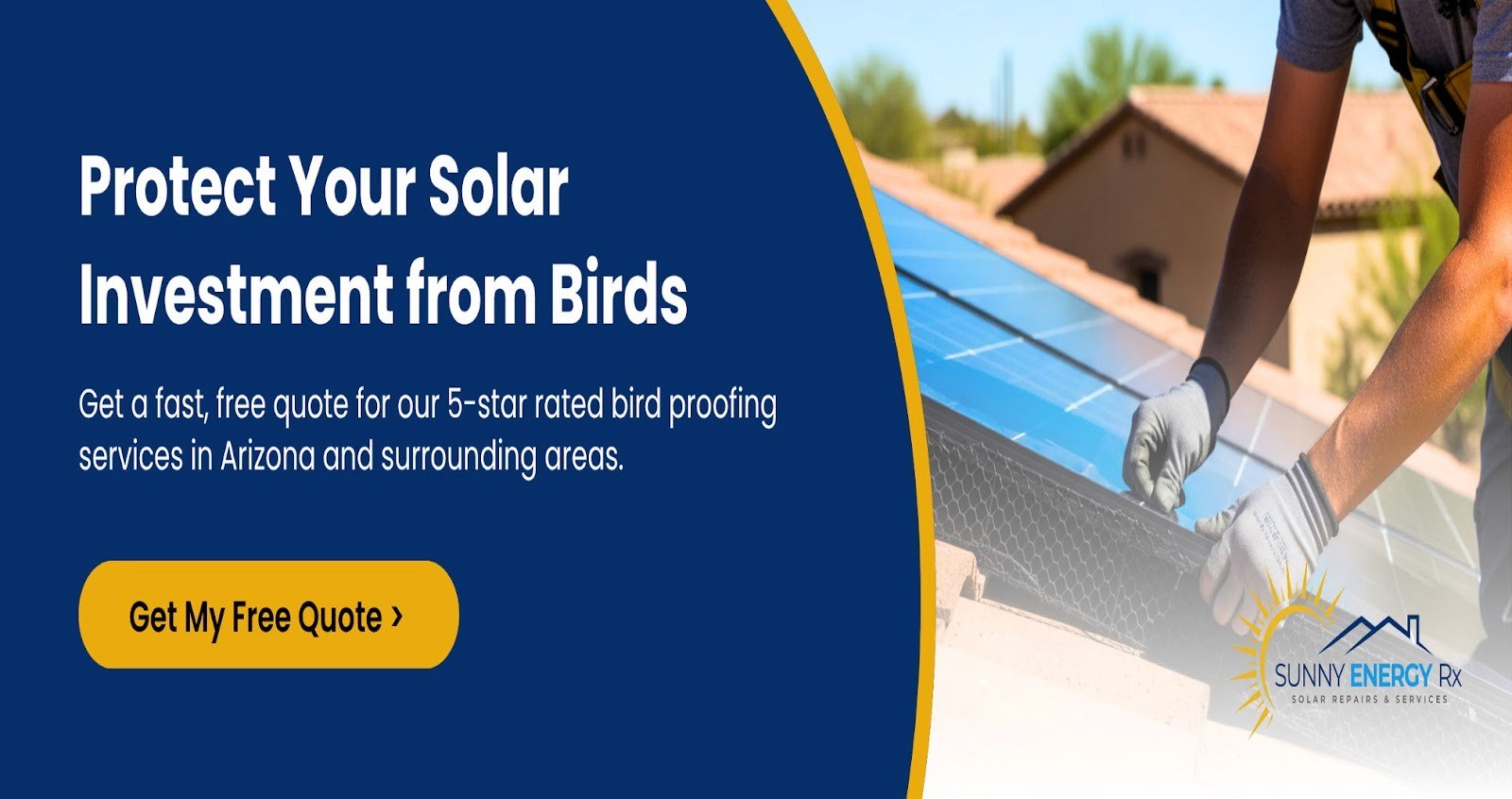
Bird activity poses risks to solar system performance and safety. That's why professional solar panel bird proofing in San Tan Valley helps keep panels clear, prevents damage, and supports long-term reliability.
The “Nest-Free” Solution: Solar Panel Bird Proofing in San Tan Valley
In San Tan Valley, solar panels often create an ideal sheltered space beneath the array—cooler than the roof surface, protected from predators, and undisturbed. This makes the area highly attractive to pigeons and other birds. Without preventive measures, nesting and debris buildup under panels can lead to mechanical damage, electrical risks, and reduced system performance.
Professional solar panel bird proofing in San Tan Valley is designed to stop these issues before they become costly repairs.
Why bird proofing is essential in San Tan Valley
Prevents nesting and debris accumulation
Birds bring twigs, feathers, and droppings that collect under panels. This debris can trap heat, block drainage, and create unhygienic conditions that worsen over time.Reduces fire and electrical hazards
Nesting materials are flammable and can come into contact with wiring. Bird activity may also damage cables or loosen connections, increasing the risk of faults or system shutdowns.Protects roof and mounting hardware
Acidic bird droppings can corrode metal components and roofing materials. Continuous nesting pressure may also loosen mounts or compromise roof surfaces.Maintains system efficiency and airflow
Blocked airflow beneath panels can raise operating temperatures, reducing efficiency and placing added stress on inverters and electrical components.
Why DIY or Improper Bird Proofing Can Cause Bigger Problems
In San Tan Valley, extreme heat, seasonal monsoon winds, and intense sun exposure make solar panel bird proofing far more complex than it may appear. DIY solutions or improperly installed systems often fail quickly and can introduce new risks that outweigh the original bird problem.
Plastic netting that deteriorates in extreme heat
Low-grade plastic or nylon netting becomes brittle under prolonged sun and high temperatures. Over time, it cracks, sags, or breaks apart, allowing birds to re-enter while leaving behind loose material that can snag wiring or clog drainage paths.Improperly attached mesh that rattles in monsoon winds
Mesh that isn’t securely fastened or tensioned can vibrate during high winds. This constant movement can loosen mounting hardware, damage panel frames, and create noise issues that worsen during storm seasons.Installations that trap debris instead of preventing it
Poorly designed barriers can act like nets, catching leaves, feathers, and nesting materials. Trapped debris restricts airflow beneath the panels, increases heat buildup, and raises the risk of fire or electrical faults.Drilled frames that void manufacturer warranties
Some DIY installations involve drilling into panel frames or mounting rails. This can immediately void manufacturer warranties, compromise weather seals, and expose the system to moisture intrusion and long-term structural damage.
Professional bird proofing uses heat-resistant materials, non-invasive fastening methods, and proper spacing to ensure airflow and durability. In a demanding environment like San Tan Valley, expert installation isn’t just safer—it prevents repeat problems, protects warranties, and delivers long-term reliability.
Solar Panel Bird Proofing Cost in San Tan Valley
Bird proofing is a small but important investment for homeowners in San Tan Valley, where pigeons and other birds commonly nest beneath solar panels. On average, solar panel bird proofing in San Tan Valley costs between $800 and $2,500 for a standard residential system.
The final price depends on factors such as the number of panels, roof height and pitch, ease of access, and whether existing nests or debris must be removed before installing protective mesh or critter guards.
Solar Panel Bird Proofing by Sunny Energy RX
Bird problems don’t fix themselves. Once pigeons identify your solar array as a safe nesting location, they return repeatedly—especially in San Tan Valley’s warm, dry climate where shade under panels is limited.
Sunny Energy RX provides professional solar panel bird proofing in San Tan Valley designed to permanently block access beneath your system without damaging panels, voiding warranties, or compromising airflow.
Our Bird Proofing Process
Unlike general pest control companies, we specialize in solar systems. Our technicians understand mounting systems, wire routing, and manufacturer requirements.
Our service includes:
1. Safe Nest & Debris Removal
Removal of nesting materials, feathers, and droppings
Careful cleaning around wiring and junction boxes
Sanitization of affected areas
This reduces fire risk and restores proper airflow beneath the array.
2. System Inspection
Visual inspection of wiring for bird-related damage
Check for loose conduit or mounting hardware
Review of airflow and panel spacing
If performance issues are detected, we can recommend Solar System Diagnostics or Performance Troubleshooting as needed.
3. Professional-Grade Exclusion Barrier Installation
UV-resistant, coated steel mesh
Custom-fitted to your specific panel layout
Secured without drilling into panels or voiding warranties
Designed to maintain proper ventilation
Even with protective measures, panels may occasionally require maintenance to keep your system operating efficiently. Professional solar panel repair in San Tan Valley addresses these issues safely and cost-effectively.
The “Patch & Power” Approach: Solar Panel Repair in San Tan Valley
Unlike routine cleaning or inspections, solar panel repair addresses physical, electrical, or performance-related issues that prevent panels from operating at full capacity. Small patches can fix localized damage before it spreads, helping homeowners and businesses avoid compounding problems and extended production losses.
This is why professional solar panel repair in San Tan Valley focuses on restoring performance, safety, and long-term reliability without unnecessary system replacement.
Common solar panel repair needs in San Tan Valley
Cracked or damaged glass surfaces
Thermal expansion, impact debris, or improper installation can lead to hairline cracks or visible glass damage. Even minor cracks can allow moisture intrusion and reduce energy output if not repaired promptly.Hot spots and uneven power generation
Shading, internal cell damage, or localized dirt buildup can cause hot spots that stress individual cells. Repairs focus on identifying affected panels and restoring balanced performance across the system.Loose wiring and connection faults
Temperature fluctuations and system vibration can loosen connectors or degrade wiring over time. Repairing these issues is critical to prevent power loss, arcing, or safety hazards.Delamination and back sheet deterioration
Prolonged heat exposure can cause layers within the panel to separate, reducing efficiency and accelerating wear. Professional assessment determines whether targeted repair or panel replacement is required.Mounting and structural issues
High winds or long-term exposure can shift racking systems or loosen fasteners. Panel repair often includes securing mounts to ensure proper tilt, alignment, and roof protection.
A reliable solar panel repair service in San Tan Valley begins with a detailed inspection to pinpoint underperforming or damaged panels, followed by precise repairs that align with manufacturer specifications.
Addressing panel issues early not only restores lost energy production but also protects inverters, wiring, and monitoring systems from additional strain—ensuring the entire solar system continues to operate efficiently in the long term.
What solar panel repair typically involves
Solar panel repair in San Tan Valley is a multi-step process focused on identifying the root cause of underperformance and restoring the panel’s ability to generate stable power.
Comprehensive panel diagnostics
Technicians test voltage, current, and resistance at the panel level to identify underperforming modules. Infrared scanning and electrical testing help locate hidden issues such as microcracks, cell damage, or internal resistance problems.Repair of cracked glass and microcracks
Hairline cracks caused by thermal expansion, impact debris, or installation stress can disrupt electrical flow and allow moisture intrusion. Repairs focus on sealing, stabilizing, or isolating affected panels to prevent further degradation and energy loss.Hot spot identification and correction
Hot spots occur when damaged cells or uneven shading force certain areas of a panel to overheat. Left untreated, they can permanently damage cells and reduce panel lifespan. Repair includes correcting the underlying electrical imbalance or replacing affected modules if necessary.Wiring, junction box, and connector repairs
Heat cycling and environmental exposure can loosen connectors, corrode terminals, or damage junction boxes. These issues reduce power transfer efficiency and pose safety risks. Repairs restore secure, code-compliant electrical connections.Delamination and back sheet damage assessment
Prolonged exposure to high temperatures can cause internal layers of the panel to separate or the backsheet to degrade. Technicians evaluate whether targeted repair is viable or if panel replacement is required to maintain system integrity.Mounting and alignment corrections
Shifting racks, loose fasteners, or improper tilt angles can reduce sun exposure and place stress on panels. Solar panel repair often includes reinforcing mounts and realigning panels to ensure optimal orientation and roof protection.
Addressing panel issues early restores energy production and protects your system’s components. A key part of this is professional solar monitoring system services in San Tan Valley, which track performance and ensure reliable, long-term operation.
Solar Monitoring System Services in San Tan Valley: Stay Ahead of Issues and Maximize Production
Consistent performance of solar systems isn’t automatic—it requires visibility into how your system is operating at all times. That’s where comprehensive solar monitoring system services come in: they let you track real performance, catch problems early, and maintain reliable production from your investment.
What Solar Monitoring Services Do
Solar monitoring systems collect live performance data from your solar array, often including voltage, current, power production, and inverter status—and make it available through dashboards or mobile apps. This continuous tracking gives detailed insights into how much energy your system is generating at any moment and over time, helping you understand overall production patterns and spot anomalies quickly.
Key Features of Professional Monitoring
A robust solar monitoring system service goes beyond basic data viewing and includes:
Real-Time Performance Tracking: Your system’s output is watched around the clock, with performance metrics updated frequently so sudden drops or faults don’t go unnoticed.
Automated Alerts: If the system detects unusual behavior—like an inverter error, communication fault, or unexpected production drop—alerts are sent instantly so action can be taken right away.
Remote Diagnostics: Many issues can be diagnosed and sometimes resolved remotely, such as resetting inverters or troubleshooting communication links without an on-site visit.
Data Visualization & Reports: Clear dashboards and periodic reports allow you to track daily, monthly, and long-term production trends and spot patterns that might signal emerging problems.
Expert Analysis: Monitoring services often include professional interpretation of data, so you get actionable insights—not just numbers. Experts can pinpoint causes of underperformance and recommend targeted fixes, helping prevent costly repairs later.
Why San Tan Valley Homeowners Need Monitoring Services
Without monitoring, homeowners often assume their system is performing fine simply because it’s “on.” In reality, subtle issues—like wiring problems, inverter faults, shading events, or module underperformance—can quietly reduce production over time. Professional solar monitoring system services help detect these issues before they significantly impact energy output or savings.
How Sunny Energy RX Delivers Solar Monitoring System Services in San Tan Valley
Sunny Energy RX provides professional solar monitoring system services designed to give homeowners clear visibility, fast response, and long-term protection—especially for orphaned systems whose original installer is no longer available.
1. Monitoring Setup & Optimization
If your system already has monitoring but it’s offline, misconfigured, or no longer supported, we:
Reconnect communication gateways
Restore inverter-to-app connectivity
Update firmware when applicable
Verify accurate production reporting
For systems without active monitoring, we assess compatibility and help implement a reliable monitoring solution based on your inverter and equipment brand.
2. Active Performance Oversight
We don’t just help you log into an app and leave you there.
Our monitoring services include:
Reviewing historical production data
Comparing expected vs. actual output
Identifying gradual performance decline
Flagging abnormal production drops
In San Tan Valley, dust buildup, heat-related inverter strain, and bird-related airflow restriction can cause subtle output loss that homeowners may not immediately notice. We look for those patterns early.
3. Alert Response & Remote Diagnostics
When alerts appear—such as:
Inverter fault codes
Communication errors
Sudden production drops
Grid or voltage irregularities
Our technicians interpret the data and determine whether the issue can be resolved remotely or requires on-site service. Many issues, such as inverter resets or communication faults, can be addressed without unnecessary service calls—saving time and preventing extended downtime.
4. Integrated Service Support
Monitoring is most powerful when combined with:
Solar System Diagnostics
Performance Troubleshooting
Solar Panel MaintenanceWarranty Claim Assistance
If monitoring reveals a failing inverter, underperforming string, or potential warranty issue, Sunny Energy RX handles the next steps—so you’re not left navigating manufacturer support alone.
Ideal for Orphaned Solar Systems
Many San Tan Valley homeowners were left without installer support after company closures. Monitoring access is often lost, disconnected, or never properly transferred. Sunny Energy RX specializes in restoring oversight for these systems, ensuring you’re no longer operating blindly.
If you’re unsure whether your system is performing as it should—or if your monitoring portal hasn’t been checked in months—it’s time for a professional review. Schedule solar monitoring system service in San Tan Valley with Sunny Energy RX today and gain clear, expert-backed insight into your system’s real performance.
Monitoring alone isn’t enough, regular upkeep ensures panels operate at peak efficiency. Targeted solar panel maintenance in San Tan Valley complements monitoring by cleaning, inspecting, and servicing components before minor issues reduce output or lead to costly repairs.
The “Performance Preservation” Plan: Solar Panel Maintenance in San Tan Valley
San Tan Valleys' solar systems are built to be durable, however, long-term exposure to heat, debris, and environmental stress can quietly reduce efficiency and shorten system lifespan if left unchecked. Unlike basic cleaning, solar panel maintenance in San Tan Valley is a comprehensive process designed to keep every component of your system operating safely, efficiently, and within warranty requirements.
Why Routine Maintenance Matters in San Tan Valley
San Tan Valley solar systems face unique stress factors that make regular maintenance especially important:
Dust and fine debris reduce energy absorption and accelerate wear
Extreme heat stresses electrical components and inverters
Monsoon storms can loosen mounts, damage wiring, or introduce moisture
Bird activity can lead to nesting, wiring damage, and blocked airflow
Without scheduled maintenance, these issues often go unnoticed until energy bills rise or systems shut down unexpectedly.
What’s Covered in Comprehensive Solar Panel Maintenance
A professional maintenance visit in San Tan Valley typically combines visual, electrical, and performance checks to ensure your system is working as designed.
Panel & Surface Assessment
Technicians inspect panel glass for microcracks, discoloration, delamination, or hot-spot damage caused by prolonged heat exposure. Frames and seals are checked to ensure dust and moisture aren’t entering the panel structure.Electrical System Checks
Connections, wiring, and junction boxes are examined for heat damage, corrosion, or loosened fittings—issues that are common in high-temperature environments like San Tan Valley. Proper grounding and voltage consistency are verified to prevent power loss or safety risks.Inverter & System Performance Review
Since inverters often fail before panels, maintenance includes checking inverter error codes, cooling systems, and output trends. Any sudden drops in production are investigated before they escalate into costly repairs.Mounting & Roof Interface Inspection
Racking systems are checked for alignment, structural integrity, and secure anchoring. Roof penetrations and flashing are examined to prevent leaks, especially after monsoon winds or storms.Monitoring Data Analysis
If your system includes monitoring, technicians review historical and real-time data to identify underperforming panels, shading issues, or intermittent faults that may not be visible during a physical inspection.
The ROI Calculation for San Tan Valley Homeowners
Think of solar panel maintenance as “heat insurance” for your solar investment in San Tan Valley. In a climate with intense sun and prolonged heat, small preventive actions—like routine cleaning and inspections—cost relatively little. But when maintenance is ignored, minor issues can escalate into serious problems, leading to reduced energy output, inverter strain, and costly repairs that far outweigh the cost of regular service.
How Often Should Solar Panel Maintenance Be Done?
For most homeowners in San Tan Valley:
Annual maintenance is recommended for newer systems
Biannual maintenance is ideal for older systems or homes near open desert land
Post-storm inspections help catch damage after monsoon season
Pre-warranty expiration checks ensure issues are documented and addressed in time
If your system hasn’t had a professional inspection in the last 12 months, San Tan Valleys' heat, dust, and monsoon activity may already be impacting performance. Schedule professional solar panel maintenance in San Tan Valley with Sunny Energy RX today.
Spot Hidden Problems Early: Solar Panel Inspection Services in San Tan Valley
Even if your panels look fine from the ground, small issues — like micro-cracks, loose mounts, electrical faults, or gradual output decline — can silently reduce production, pose safety risks, and lead to costly repairs if left unchecked. Trained solar specialists use professional tools and techniques to evaluate every part of your system, ensuring you get the maximum energy and value from your investment.
What Solar Panel Inspection in San Tan Valley Typically Includes
A comprehensive inspection looks beyond surface appearance to assess the full health of your system:
Visual and surface checks: Technicians inspect panel glass for cracks, chips, discoloration, or signs of impact and weathering that can compromise performance.
Electrical system evaluation: Wiring, junction boxes, inverters, connectors, and grounding systems are checked to ensure safe, continuous electrical flow and to spot potential hot spots before they become hazards.
Mounting and structural review: Properly tightened hardware and secure mounting reduce the risk of panel shifting, roof damage, or wind uplift — especially important during Arizona’s monsoon season.
Performance trend analysis: Professionals compare your system’s actual energy output to expected levels, identifying underperforming panels or strings that might not be obvious without detailed evaluation.
Why Regular Inspections Matter in San Tan Valley
Professional solar panel inspections in San Tan Valley helps you:
Catch problems before they escalate: Early detection means simple fixes rather than expensive repairs or replacements.
Maximize energy output: Identifying underperforming components helps you recover lost production and save more on your energy bills.
Maintain system warranties: Many manufacturer warranties require documented professional inspections to remain valid.
Protect safety: Faulty wiring, loose mounts, or hidden damage can pose fire or electrical risks. Inspections reduce those hazards by identifying them early.
How Often Should Panels Be Inspected?
Most experts recommend at least annual professional inspections for residential solar systems in Arizona climates like San Tan Valley. In addition, schedule an inspection after severe weather events, after prolonged dust buildup, or if you notice a sudden dip in production.
Choosing the Right Inspection Service
When selecting a provider, look for technicians with experience in Arizona’s desert conditions and who use thermal imaging and electrical testing tools, these go beyond simple visual checks to uncover hidden issues. A detailed inspection report with clear findings and repair recommendations adds value and helps you plan maintenance or upgrades effectively.
Solar inspections in San Tan Valley uncover hidden issues like micro-cracks, wiring faults, and gradual output drops. To keep these repairs and performance gains effective, it’s equally important to ensure the roof beneath your system is structurally sound.
Solar Roofing in San Tan Valley: The “Roof & Rays” Check
For homeowners in San Tan Valley, solar roofing goes beyond just mounting panels on your house — it integrates solar energy production with your roof’s structure, creating a long-lasting, visually seamless solution that generates electricity while protecting your home from the Arizona sun and seasonal weather.
Solar roofs can be an attractive alternative to traditional solar panels, especially if you’re planning a roof replacement or want a durable, modern roofing upgrade that also helps reduce energy costs.
Key Benefits for San an Valley Homes
Below are the key benefits San Tan Valley homeowners gain from installing solar roofing, combining energy efficiency, durability, and lasting value.
Dual Function — Power & Protection: Solar roofing acts as your roof and your power generator, reducing utility bills while shielding your home from intense sunlight and monsoon storms typical of Arizona summers.
Durability in Harsh Climate: Designed for wind resistance and UV exposure, solar roofing materials (especially tempered glass tiles) stand up well to rapid temperature swings common in San Tan Valley, enduring hot daytime heat and cooler nights without cracking or warping.
Increased Aesthetic Appeal: With a low-profile look that blends with traditional roofing styles, solar roofing enhances curb appeal compared to conventional panel mounts that sit visibly above the roof surface.
Long Lifespan: Quality solar roofs often carry warranties of 20–50+ years, outlasting many standard asphalt shingles and matching the typical production life of solar systems.
Considerations Before You Choose
Before installing solar roofing in San Tan Valley, it’s important to weigh several factors to ensure the system meets your home’s needs. Here are key considerations San Tan Valley homeowners should keep in mind before opting for solar roofing, covering costs, efficiency, and structural factors.
Higher Upfront Cost: Solar roofing typically has a much higher initial price than traditional panel systems, partly because you’re investing in both roofing and energy generation at once. Depending on materials and system size, costs can vary significantly.
Installer Availability: Fewer contractors specialize in integrated solar roofing compared to standard solar panels, which can affect project timelines and pricing.
Efficiency Trade-Offs: Solar roofing shingles may have slightly lower energy conversion efficiency compared to conventional mounted panels, since they are integrated flat into the roof and airflow is more restricted.
Structural Requirements: Not all roofs are ideal for solar roofing — older roofs or those with complex geometry might need reinforcement or complete replacement before solar roofing can be installed safely.
Solar Roofing Costs, Savings & ROI in San Tan Valley
When considering solar roofing — especially building-integrated options like solar shingles or premium systems — it’s important to understand the costs, long-term savings, and return on investment (ROI) compared to traditional solar panels. The numbers vary based on system size, roof age, and whether you’re replacing your roof anyway, but the general patterns hold true across Arizona.
Upfront Cost Differences
Upfront cost is one of the biggest factors separating traditional solar panels from solar roofing systems, with each option offering a different balance between initial investment and long-term value.
Traditional Solar Panels: A typical residential roof-mounted solar panel system (before incentives) usually costs around $2.50–$3.50 per watt, which for many homes totals roughly $15,000–$25,000 before tax credits. After the 30% Federal Solar Investment Tax Credit (ITC), many homeowners see net pricing closer to $10,000–$18,000 for a fully functional solar array.
Solar Roofing (Shingles or Integrated BIPV): Solar shingles and other integrated solar roofing options cost significantly more — often $4.50–$7.00+ per watt and translating to $27,000–$42,000 or more before incentives for a similar-sized system. If you’re replacing the roof at the same time, the combined cost might make sense because solar shingles serve as the roofing material themselves.
Typical ROI and Payback Period: Panels vs. Solar Roofing in San Tan Valley
When homeowners evaluate long-term value, return on investment (ROI) and payback period are two of the most important financial metrics to consider—especially in a high-sun region like San Tan Valley.
Traditional Solar Panels
Due to lower upfront costs and high efficiency, most roof-mounted solar systems in Arizona reach breakeven in about 5–8 years through energy savings and tax incentives. After payback, they continue producing savings for decades, resulting in a higher lifetime ROI.Solar Roofing / Solar Shingles
Solar roofing in San Tan Valley usually has a longer payback period—typically 10–14+ years—because integrated solar shingles cost more upfront. While they offer a sleek, built-in appearance and combine roofing with energy generation, financial returns accumulate more slowly.
Overall Comparison
Over a 20–30 year lifespan, both options deliver strong energy bill savings, but traditional panels generally provide faster payback and better overall ROI, while solar roofing appeals more to homeowners focused on aesthetics and roof replacement timing.
In short, both systems can be financially beneficial—but the balance between faster payback and long-term aesthetics often determines the right choice for each homeowner.
Sunny Energy RX’s Role in Solar Roofing in San Tan Valley
While Sunny Energy RX does not install new solar roofing systems, we play a critical and often overlooked role in protecting homeowners who already have solar integrated with their roof.
1. Solar Roof System Diagnostics & Performance Troubleshooting
If your solar roofing system is:
Underperforming
Showing inverter errors
Experiencing inconsistent production
Triggering monitoring alerts
Our NABCEP-certified technicians perform detailed diagnostics to determine whether the issue is electrical, inverter-related, or tied to environmental stress common in Arizona climates.
2. Solar Panel & Inverter Replacement (When Applicable)
Some integrated solar roofing systems still utilize:
Central or string inverters
Microinverters
Optimizers
If these components fail, which is common in high-heat areas like San Tan Valley—we provide professional inverter replacement and system recalibration to restore production safely and within manufacturer guidelines.
3. Solar Panel Removal & Reinstallation for Roof Work
If part of your solar roofing system requires roof repairs or structural updates, Sunny Energy RX provides:
Careful system deactivation
Safe component removal
Proper storage and labeling
Reinstallation aligned to manufacturer specifications
This is especially important after monsoon-related roof damage or when underlayment needs replacement.
4. Warranty Claim Assistance
Many solar roofing products carry long material warranties—but navigating those claims can be complex, especially if the original installer is no longer in business.
Sunny Energy RX assists San Tan Valley homeowners with:
Documenting performance issues
Gathering diagnostic data
Coordinating with manufacturers
Ensuring claims are properly submitted
This is particularly valuable for homeowners with orphaned solar systems.
5. Monitoring & Ongoing Maintenance Support
Solar roofing systems still require:
Monitoring oversight
Electrical inspections
Performance analysis
Preventative maintenance
In Arizona’s climate, subtle degradation can occur long before visible roof damage appears. Our team ensures your system remains safe, efficient, and compliant with warranty standards.
The “Roof & Rays” Check — Why It Matters in San Tan Valley
Before any major roof or solar decision, homeowners benefit from a professional evaluation that considers both:
Roof condition
Solar system health
Mounting integrity
Electrical safety
Long-term production trends
Sunny Energy RX provides experienced, unbiased assessments focused strictly on solar system performance and protection—not selling new installations.
Conclusion: Protect, Maintain, and Maximize Your Solar Investment in San Tan Valley
San Tan Valley homeowners enjoy some of the highest solar potential in Arizona, but the region’s intense sun, heat, dust, and seasonal storms make proactive care essential. From solar panel cleaning and maintenance to bird proofing, inverter repairs, monitoring services, and solar roofing support, every component of your system benefits from professional attention.
By partnering with experts like Sunny Energy RX, you ensure your solar system operates safely, efficiently, and reliably—maximizing energy production, protecting warranties, and extending the lifespan of your investment. Whether your system is newly installed, aging, or orphaned, a structured service plan keeps your panels producing at peak performance and shields your home from preventable damage.
In San Tan Valley, solar power isn’t just an energy choice—it’s a long-term investment. Protect it wisely, maintain it regularly, and enjoy years of clean, reliable energy.
Schedule your San Tan Valley System Health Check with Sunny Energy Rx today. We'll identify silent damages caused by heat and give you a clear path to restoring full production and protecting your long-term savings.
Summary
San Tan Valley Solar Potential – High sunlight exposure makes solar energy highly effective but also exposes systems to heat, dust, wind, and seasonal storms.
Comprehensive Solar Services – Includes cleaning, maintenance, monitoring, inverter repairs, bird proofing, panel inspections, and solar roofing support.
Solar Panel Maintenance & Cleaning – Prevents efficiency loss, protects inverters, and extends system lifespan.
Bird Proofing – Stops nesting and debris buildup under panels, reducing fire, electrical, and mechanical risks.
Solar Inverter Repairs – Ensures reliable power conversion and prevents system downtime caused by heat, voltage fluctuations, or component wear.
Monitoring Services – Tracks real-time performance, detects subtle issues early, and supports warranty compliance.
Solar Roofing Support – Protects integrated solar roofs, handles diagnostics, repairs, inverter replacements, and warranty claims.
“Patch & Power” Approach – Targeted repairs like patching microcracks restore performance without unnecessary full system replacement.
ROI Protection – Regular professional service minimizes costly repairs, maximizes energy production, and preserves long-term savings.
Expert Partner – Sunny Energy RX specializes in Arizona solar, including orphaned systems, ensuring safe, efficient, and warranty-compliant solutions.
Comprehensive solar panel maintenance in San Tan Valley typically costs $200–$400 per year, covering inspections, cleaning, electrical testing, and inverter checks. Regular maintenance prevents costly emergency repairs, which can easily exceed $2,500 due to dust, heat, or storm-related damage.
Solar panels should be cleaned 2–4 times per year, with extra attention after monsoon storms or heavy dust events. Properties near desert landscapes, dirt roads, or construction sites may require more frequent cleaning to maintain peak performance.
Neglecting cleaning can reduce energy output by 15–25% over time due to dust, pollen, and debris accumulation. Residue from monsoons or hard water spots can permanently etch panel surfaces, leading to higher electricity bills and reduced system efficiency.
Repairs typically range from $150–$400 per panel, $300–$800 for inverter component fixes, and $2,000–$4,000 for full inverter replacement. Costs vary depending on system size, type of damage, and whether the system is under warranty.
Replacing 10-year-old solar panels can be worthwhile if they show reduced efficiency, frequent faults, or lack modern technology. Upgrading improves energy output, reduces maintenance costs, and may qualify for incentives, making your solar system more reliable and cost-effective long-term.
Sunny Energy RX Team
Published Mar 25, 2026