Living in Arizona means dealing with intense, relentless sunshine. Consequently, you likely spend a fortune keeping your home cool. You have probably looked at your roof and wondered if it could do more than just bake in the heat.
For years, homeowners had to choose between aesthetics and efficiency. However, that choice is no longer necessary. Solar roofing has arrived, and it changes everything for desert living.
This guide will break down exactly how solar panels on roofs work in our unique climate. We will explore the real costs versus the savings. Furthermore, we will help you decide if replacing your roof with a mini power plant is the right move for your home.
Sunny Energy RX does not install solar shingles, Tesla Solar Roof systems, or other building-integrated photovoltaic (BIPV) products. Our expertise is in solar panel removal and reinstallation (R&R), maintenance, inspections, and repair services for existing solar systems across Arizona. Contact us now for long-term system care.
What is Solar Roofing?
Solar roofing is an advanced roofing solution that integrates solar energy technology directly into the structure of the roof. Rather than installing separate solar panels over existing materials, solar roofing systems use purpose-built solar shingles or tiles that replace conventional roofing components.
Solar panels and a roof are a shift in home construction that is making thousands of Arizona homeowners get efficient solar energy without compromising on the aesthetics of their home.
It is not just about bolting heavy rectangles onto your existing tiles. Instead, solar roof panels integrate solar technology directly into the roofing materials themselves. These systems function as your home's first line of defense against the elements.
Therefore, they replace the need for traditional asphalt or concrete tiles entirely.
The Aesthetic Edge: Design-conscious homeowners often dislike the look of traditional rack-mounted panels. Solar roofing provides a sleek, seamless appearance. It maintains the architectural integrity of your home while generating electricity. For a luxury home in Scottsdale, this aesthetic preservation is crucial. Some homeowners prefer the appearance of integrated solar roofing because it blends more closely with traditional roofing materials.
Market Context: Admittedly, the solar roof cost is higher per watt than traditional panels. However, it is a premium solution designed for new builds or full re-roofing projects. If you need a new roof anyway, then bundling the cost makes financial sense.
Key Examples: Tesla Solar Roof uses durable glass tiles. Meanwhile, GAF Energy’s Timberline Solar offers a shingle that installs like a standard roof. These are systems that function as the roof itself, not just an add-on.

How Solar Roofing Works in Arizona?
Arizona’s abundant sunshine makes it one of the best environments for solar roofing adoption. Understanding how solar roof panels perform in these conditions helps homeowners clearly see the long-term value before getting into the technical details.
The Advantage of Sun
The technology relies on standard photovoltaic cells. However, Arizona’s location gives us a massive advantage. With over 300 days of sunshine, solar energy roofs are more productive here than almost anywhere else.
Through regular solar service in Florence, a system will generate significantly more power than the same solar system in Seattle. Therefore, your return on investment accelerates simply by living here.
Heat Management
It’s natural to be concerned about how extreme heat might affect the system. Modern solar roofing tiles are engineered to handle Arizona’s extreme summer temperatures. Unlike rack-mounted panels that have airflow underneath, these tiles use heat-resistant glass.
Furthermore, they utilize specialized underlayments. This protects your home’s envelope from thermal transfer. Hence, your attic stays reasonably cool even when the roof surface is hot.
Grid Integration (APS/SRP/TEP)
Connecting your solar roofing system to the power grid is a standard process. Whether you are with APS, SRP, or TEP, the concept is similar.
Most Arizona utilities operate on "Net Billing" or similar structures. You sell excess power back to the grid during the day. This offsets those terrifyingly high July and August AC bills. A homeowner we spoke to in Peoria eliminated their summer spike using this method.
Before choosing a system, it’s important to understand the different solar panel roof options available and how they perform in Arizona’s climate.
Types and Examples of Arizona Solar Roofing
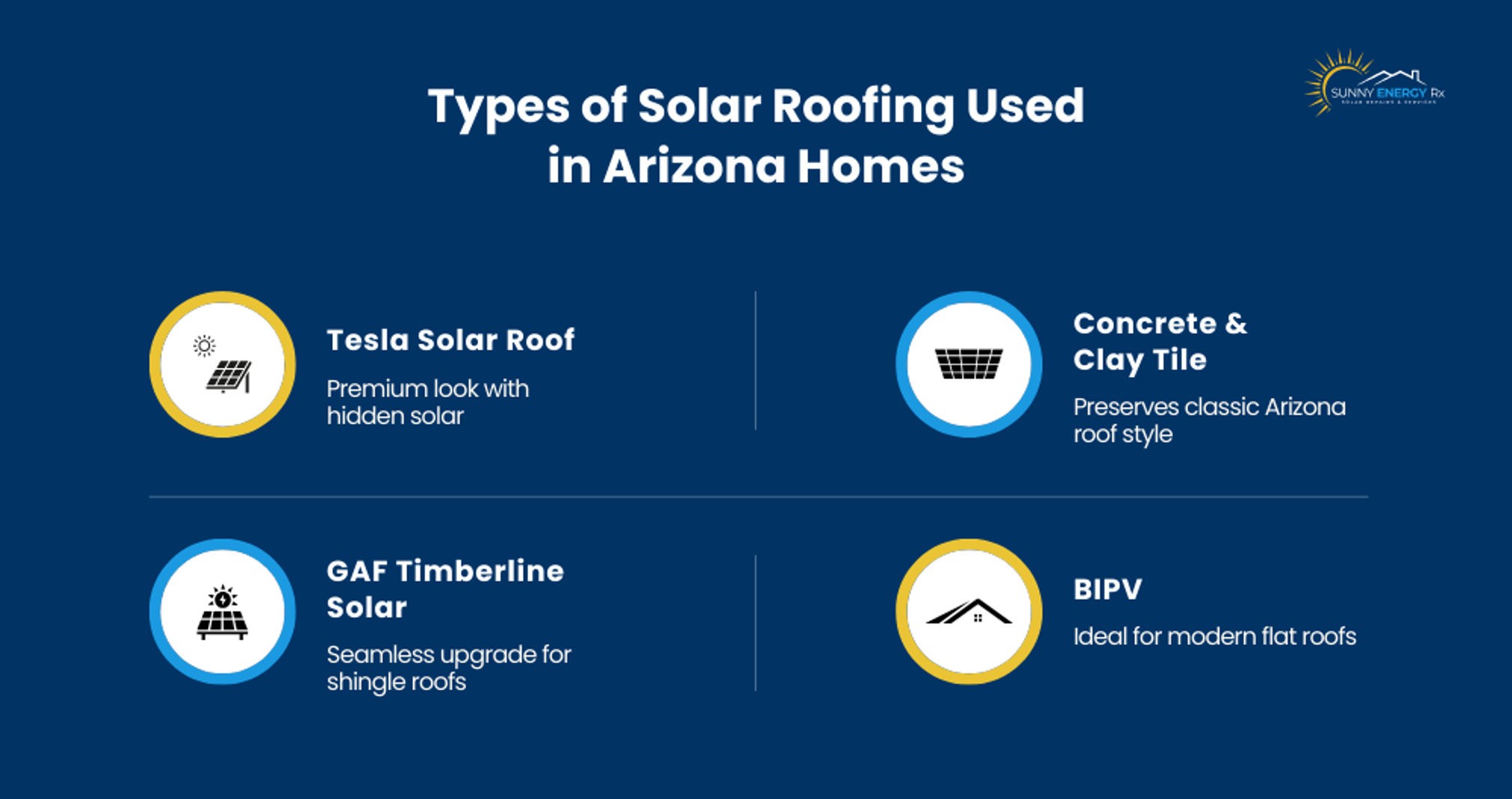
The types of solar roofing in Arizona are:
Tesla Solar Roof (Glass Tiles)
The Tesla Solar Roof is one of the most recognized examples of integrated solar roofing technology. Unlike traditional rooftop solar systems that use mounted panels, the Tesla Solar Roof incorporates photovoltaic cells directly into tempered glass roof tiles, allowing the roof itself to generate electricity.
The product is available in several tile designs intended to resemble conventional roofing materials, helping homeowners maintain a uniform roof appearance while producing solar energy. Because the system combines both roofing and energy-generation functions, installation typically requires specialized training and is generally considered during new home construction or complete roof replacement projects.
As with other integrated solar roofing products, homeowners should consider costs, energy production, maintenance requirements, and compatibility with their home's needs.
Concrete & Clay Replacements
Many Arizona homes feature Spanish or Mediterranean terra cotta roofs. Manufacturers now offer solar roof tiles that integrate seamlessly with these designs.
These solar roof tiles interlock with standard Eagle roofing tiles. Therefore, you can have a solar section that is indistinguishable from the rest of your clay roof. This is a popular choice for homeowners in Tucson.
GAF Energy Timberline Solar
This type of asphalt shingle roofs are gaining popularity in recent times. If you live in an older neighborhood in Mesa or Flagstaff, then this is for you.
These serve as solar roof shingles. They are waterproof and installed by regular roofing crews. It simplifies the solar roofing design process significantly.
BIPV (Building Integrated Photovoltaics)
Building-Integrated Photovoltaics (BIPV) are solar technologies that are incorporated directly into building materials, such as roofs, facades, or skylights. Unlike traditional rooftop solar panels, BIPV systems become part of the building's structure while also generating electricity.
Because these systems combine construction materials and solar technology, their design, installation, and maintenance requirements can vary by product and manufacturer.
Is Solar Roofing Replacing Solar Panels?
As solar technology evolves, many homeowners wonder whether modern solar roofing systems are beginning to replace traditional solar panels. Let’s understand if solar roofing is the main deal or simply an offer to provide an alternative.
The HOA Factor
Arizona has some of the strictest HOAs in the country. We have heard from a homeowner in Surprise about how they were given some restrictions on placement.
This creates friction. However, solar roofing is effectively replacing panels in luxury communities. Because it is invisible from the street, HOAs in places like Litchfield Park have no grounds to complain.
New Build Trends
Arizona is experiencing a massive housing boom. Builders in Queen Creek and Surprise are increasingly offering integrated solar energy roofs as a premium upgrade.
It is easier to finance a solar energy roof through a mortgage than to buy panels later. Consequently, new developments are looking sleeker and more energy-efficient.
Efficiency Reality
For pure raw output per dollar, standard panels still rule. However, solar roofing is replacing panels for those valuing aesthetics and roof longevity. It is a lifestyle choice as much as a financial one.

Pros & Cons of Solar Roofing in Arizona
Solar roofing performs differently in Arizona’s extreme heat, intense UV exposure, and seasonal monsoon conditions. Understanding both the advantages and disadvantages of solar panel roofing helps homeowners decide whether solar roofing is the right fit for their climate, energy goals, and budget.
Pros of solar roofing
Monsoon & Wind Resistance
Many solar roofing tiles are rated for 110+ mph winds
Better protection against haboobs and monsoon storms
Integrated design reduces shifting or lifting
Superior UV Resistance
Tempered glass tiles don’t crack, warp, or “bake.”
Perform better than asphalt shingles under intense UV
Long-term durability in harsh desert conditions
Potential Cooling Benefits
Multi-layer construction can reduce attic heat buildup
May ease HVAC load and improve indoor comfort
Cons of solar roofing
Heat-Related Efficiency Loss
Solar cells lose efficiency at high temperatures
Flush-mounted design limits airflow
Output may dip slightly during 115°F+ summer days compared to raised panels.
Higher Upfront Cost
Solar roofing typically costs more than traditional panels
ROI may take longer for homes on low or grandfathered utility rates
Limited Installer Availability
Fewer contractors specialize in solar roofing vs. standard panels
Proper installation is critical for long-term performance
Is Solar Panel Roofing Worth it in Arizona?
AC accounts for 50-70% of summer bills here. A solar energy roof creates a fixed energy cost. You are trading a variable, rising bill for a stable asset.
A solar roof cost calculator will show that over 20 years, the savings are massive.
Arizona Specific Incentives
Federal ITC: You get a 30% tax credit on the solar roofing and solar energy roof tiles.
Arizona State Solar Tax Credit: Reimbursement of 25% of the cost, capped at $1,000.
Solar Equipment Sales Tax Exemption: Arizona waives the 5.6% state sales tax. On a $50k solar roofing project, that is huge savings.
Resale Value
Owning solar panels on the roof fetches a higher resale value for your house. For example, homes in Gilbert and Chandler with owned solar systems sell for a premium. Consequently, real estate data suggests a value increase of approximately 4 to 6%.
Learn more about solar incentives in Arizona to understand your prospects before investing.
Solar Roof Shingles Cost vs. Panels
When you look at the cost of solar roof shingles, it seems high. However, you must deduct the cost of the regular roof you would have bought.
When replacing roof shingles with solar panels, you are paying for two separate installations. With solar roofing, you pay for one labor process.
With the pros and cons in mind, the next step is understanding when solar roofing makes the most sense for Arizona homeowners.
When to Consider Solar Roofing in Arizona?
So consideration of solar roofs in Arizona will also depend on what phase of requirement you are in.
Underlayment Replacement
Tile roofs last 50 years, but the felt underlayment "cooks" and fails every 15-20 years. This is a common issue in Sun City West.
If you’re paying $15k to $20k to lift and restack solar roof tiles, it’s time to stop and reconsider. Some homeowners explore various roofing and solar options when undertaking major roof replacement projects. Why spend on a temporary fix when you can upgrade your roof into a long-term power-generating asset?
New Construction
If you are building a custom home in Rio Verde or Waddell, then installing a solar roofing system initially is cheaper than adding a roof and then adding panels later.It helps keep the build on track by simplifying the construction process and avoiding unnecessary delays.
Major Monsoon Damage
Did a microburst hit your home in Maricopa? If insurance covers a replacement, then use that payout. Roof replacement projects may prompt homeowners to reassess their long-term energy plans. It turns a disaster into an upgrade.
Is It Wise to Buy a House With a Solar Roof?
The "Grandfathered" Plans: Buying a home with existing solar in AZ can be a good decision. If the system is on a grandfathered net-metering plan, then you get favorable rates.
Lease vs. Own (Crucial for AZ Real Estate): If the previous owner leased the solar roofing, you may need to qualify to take over the payments. However, owned systems are always "wise" to buy. They add instant equity without the monthly debt obligation.
Durability and Lifespan of Solar Roof in Arizona
Living in Arizona means your roof faces relentless sun, heat, and seasonal storms—so it’s natural to ask how well a solar roof holds up over time and what kind of lifespan you can realistically expect.
UV Degradation: Standard roofing materials crack and fade. The intense sun in Youngtown destroys asphalt. Conversely, solar roof shingles and glass tiles are virtually immune to UV damage.
Thermal Shock: Arizona has huge temperature swings. It can go from 110°F day to 80°F night. Solar roofing is engineered to handle this expansion and contraction. Unlike concrete, it resists cracking under thermal shock.
Dust & Sand: Dust is a fact of life in places like Sahuarita. Glass tiles are easier to clean than rough asphalt shingles. Asphalt traps desert dust, but glass sheds it during rain.
How Long Will a Solar Roof Last?
The physical tiles (glass/steel) are often rated for "Lifetime" or 50+ years. They outlast the typical 15-20 year asphalt shingle life seen in Sierra Vista. The ability to generate power usually has a warranty of 25 years.
Even after 25 years, they will still produce power. They will likely operate at around 80 to 85% of original capacity. Therefore, your solar roofing remains a functional asset for decades.
The lifespan of solar roofing also depends on who installs it and the quality of work they provide. Finding the right solar company in Arizona is important. There are many roofing and solar companies in Arizona. You need to identify a team that understands solar panel removal if repairs are needed.
You need experts in solar roofing tiles and solar roofing cost analysis. A resident in Tempe needs a different setup than someone in the mountains.

Conclusion
Arizona is the ultimate testing ground for solar. If you have the budget, a solar roofing system offers the best protection against the desert sun. It virtually eliminates high AC bills while looking incredible.
We suggest obtaining quotes from local certified solar service professionals in Arizona. Ensure they have local knowledge of SRP/APS interconnection rules before making a decision.
However, once your system is up, you need ongoing support. Sunny Energy Rx is here for you. We handle maintenance, bird proofing, and repairs to ensure your solar investment keeps paying off. Our team is available across Arizona, including areas like Phoenix, Tucson, Flagstaff, and surrounding communities.
Summary of Solar Roofing
Solar roofing combines weather protection with energy generation, eliminating the need for rack-mounted panels.
Unlike asphalt, solar roof tiles and solar roof shingles resist cracking under the intense Arizona UV rays.
For homeowners in Scottsdale or Wittmann, solar roofing satisfies strict HOA aesthetic guidelines.
Solar roofing systems are rated for high winds, offering superior safety during the monsoon season in places like Casa Grande.
The solar roof cost is offset by the 30% Federal ITC and the Arizona Solar Tax Credit.
Solar energy roof tiles are best installed when your underlayment fails or during new construction.
Solar roofing can increase home resale value in markets by roughly 4-6%.
Using a solar roof cost calculator helps compare the long-term ROI against solar roof shingles cost.
Best solar shingles utilize tempered glass or durable metals to withstand thermal shock.
Does insurance cover roof leaks from solar panels?Generally, homeowners' insurance covers sudden damage like hail. However, leaks due to poor installation are often excluded. For solar roofing, the manufacturer's warranty usually covers leak protection specifically.
Does mold grow under solar panels?It can happen with mounted panels if debris gets trapped. However, solar shingles or tiles are flush with the roof deck. Therefore, this effectively eliminates the dark space where mold typically grows.
Who owns the solar panels on my roof?If you paid cash or used a loan, you do. Conversely, if you signed a lease or PPA, the solar installer owns them until the contract ends or you buy them out.
How much does a solar roof cost compared to a regular roof?A solar roof cost is typically 2 to 3 times more than a standard asphalt roof replacement. However, this cost is offset over time by electricity savings and tax credits.
Can I install solar shingles on a flat roof?No. Solar roof shingles rely on gravity and overlapping layers to shed water. Therefore, they require a pitched roof. Flat roofs require different solar roofing solutions like BIPV.
Do solar roofs work during a power outage?Only if you have a battery backup system like a Powerwall. For safety reasons, grid-tied solar roofing systems shut down during outages unless stored energy is available.
Are solar shingles hail-resistant?Yes, most reputable brands like Tesla and GAF meet Class 3 or Class 4 impact ratings. This makes solar roof shingles highly resistant to hail damage common in storms.
Sunny Energy RX Team
Published Dec 19, 2025