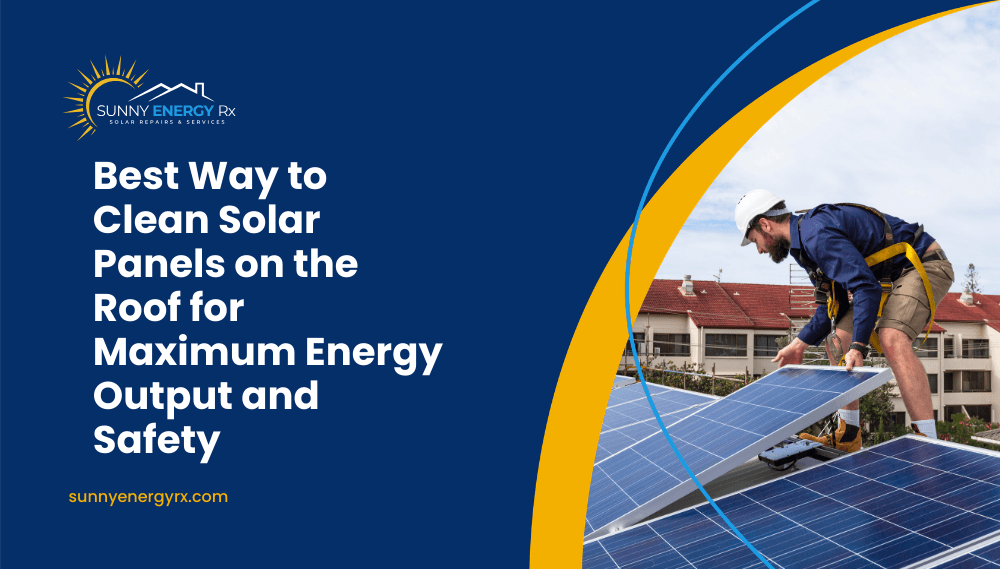
Clean solar panels produce more energy and last longer—especially in dusty, high-heat areas like Arizona. The best way to clean solar panels on the roof is to use low-pressure water, soft tools, and PV-safe cleaners. Avoid hard water, harsh chemicals, pressure washing, or walking on panels. Clean during cool hours, rinse regularly, and hire professionals for steep roofs, heavy grime, or maximum, warranty-safe performance.
In high-sun states like Arizona, keeping panels clean is not optional—it’s essential for performance. Dust storms, pollen, bird droppings, and traffic-related grime form a thin but stubborn layer on panels that blocks sunlight from reaching the cells. Even a light coating of dust can reduce output by 5–10%, while heavily soiled panels can lose 20–30% or more of their energy production over time.
Solar “orphan” systems are also common in Arizona—panels installed by companies that later shut down, like Titan Solar and SunPower. When the original installer is gone, routine maintenance (including cleaning and performance checks) often gets neglected, and Arizona dust losses add up fast.
Unclean panels don’t just produce less energy; they also work harder and run hotter, which can shorten system lifespan. Homeowners who delay cleaning home solar panels often notice higher utility bills and slower return on investment. In commercial settings, these losses add up even faster, which is why many owners rely on a professional solar panel cleaning service to maintain consistent output.
In this blog, you will learn:
The best way to clean solar panels on the roof without damaging glass or coatings
How dust, hard water, and heat reduce solar panel energy output
Safe step-by-step methods for cleaning solar panels without voiding warranties
When gentle rinsing is enough vs. when scrubbing causes damage
Why timing matters in hot climates like Arizona
Which tools, materials, and water types deliver streak-free results
Common mistakes to avoid, including pressure washing and walking on panels
When DIY cleaning is safe and when to hire a professional solar panel cleaning service
Sunny Energy RX helps homeowners and businesses keep systems performing at their best—especially “orphaned” installs that no longer have an original provider. Our team offers professional solar panel cleaning along with routine inspections and performance checks, helping restore output, catch small issues early, and keep long-term savings predictable even in Arizona’s dusty conditions. Book now to clean your solar panels.

The Correct Step-by-Step Process for Cleaning Solar Panels Safely
Cleaning must follow the correct sequence. Skipping steps or using the wrong tools—like attempting to power wash solar panels or pressure wash solar panels—can cause permanent damage and void warranties. Below is the safest, most effective approach and the best way to clean solar panels on the roof.
1. Preparation and safety
Turn off the system if manufacturer guidelines recommend it.
Choose early morning or late evening when panels are cool.
Inspect access points and decide whether cleaning solar panels from the ground is possible using extension tools. This is often the best way to clean solar panels on roofs safely for homeowners.
2. Dry debris removal
Use a soft brush or blower to remove loose dirt and leaves.
This step is crucial for cleaning solar panels on the roof because skipping it can grind abrasive dust into the glass during washing.
3. Gentle washing
Rinse with low-pressure, clean water. Never attempt to pressure wash solar panels.
Use a soft sponge or microfiber pad with a mild, non-abrasive solution—the best solar panel cleaner is one specifically designed for PV glass.
Avoid cleaning solar panels with hard water, as mineral deposits can leave residue that reduces clarity.
4. Spot treatment and detailing
Carefully remove bird droppings or stuck-on grime without scraping.
Check edges, frames, and shaded areas where buildup is common during solar roof cleaning.
5. Final rinse and inspection
Rinse thoroughly to prevent streaking.
Inspect for cracks, loose mounts, or debris trapped beneath panels. This final check is often missed but is vital for long-term efficiency.
Why skipping steps reduces effectiveness
Cutting corners on preparation increases safety risks. If you wash without removing dry debris first, abrasive dust can grind into the glass and cause scratches. Failing to rinse thoroughly can leave behind mineral film that reduces clarity and performance. Each shortcut reduces gains and increases the risk of damage—one reason many homeowners compare DIY efforts with the solar panel cleaning cost of hiring professionals. In many cases, a scheduled solar panel cleaning service is more cost-effective than repairing damaged panels.
Now that you understand the correct cleaning sequence, it’s equally important to know the safest methods for using water without risking damage to the panels.
Best Practices for Washing Solar Panels Safely With Water
Washing solar panels is often the first and safest level of solar panel cleaning, especially in dusty regions. It’s important to understand that washing and scrubbing are not the same—and confusing the two is one of the most common causes of panel damage. For routine maintenance, the best way to clean solar panels on the roof is usually gentle rinsing.
Washing vs. scrubbing: what’s the difference?
Washing relies on water flow to loosen and rinse away dust, pollen, and light grime.
Scrubbing involves physical contact to remove stuck-on debris like bird droppings or oily residue.
For routine cleaning home solar panels, washing alone is usually enough. Over-scrubbing, especially on a roof system, increases the risk of micro-scratches, seal damage, and accidents. This is why most professionals consider gentle rinsing the best way to clean solar panels on the roofs for regular maintenance.
Hose-Based Solar Panel Washing: Safe Spray Methods That Protect Performance
Using a hose or spray system is often the best way to clean solar panels on the roof when done correctly. This approach focuses on safety, simplicity, and protecting the panel surface while maintaining energy efficiency. When done with the right technique and timing, water-based cleaning can remove common buildup without risking damage to the system or reducing long-term performance.
Acceptable water pressure levels
Use standard residential hose pressure (generally under 60 PSI).
A spray nozzle with a shower or fan setting is ideal.
The goal is to rinse, not blast.
Hose-only cleaning scenarios
Hose-only washing works best for routine cleaning dust off solar panels, especially when panels are maintained on a consistent schedule and aren’t affected by heavy bird droppings or sticky tree sap. For many homeowners, this simple approach is the most practical way to maintain energy output between professional visits and can help reduce overall solar panel cleaning cost over time.
Common concerns about water pressure
Water pressure is the biggest concern people have—and for good reason. Excess pressure can damage seals, frames, and wiring. Safe washing is about volume, not force. This applies whether you’re cleaning solar panels from the ground or performing careful cleaning of solar panels on the roof with proper access.
Streak-Free Solar Panel Cleaning: The Right Water & Washing Method Explained
The type of water you use for solar panel cleaning plays a major role in how clean your solar panels actually get. Beyond pressure and technique, water quality directly affects clarity, residue buildup, and long-term efficiency, making it a key part of the best way to clean solar panels on the roof.
Purified, deionized, and soft water options
Purified or deionized (DI) water is the gold standard used by professionals. It leaves no residue and delivers the cleanest finish.
Soft water is acceptable for residential washing and is far better than untreated hard water.
Tap water can be used, but results depend heavily on local water quality.
Many professional setups use DI water-fed poles, which allow safe cleaning solar panels from the ground while achieving spotless results.
How minerals cause spotting
Hard water contains minerals like calcium and magnesium that can cause problems when used on solar panels. As this water dries on hot panels, it leaves behind white mineral spots that reduce light transmission, attract more dust buildup, and ultimately cancel out some of the performance gains achieved through cleaning.
This is why cleaning solar panels with hard water often leads to streaks and why a final rinse quality matters as much as the wash itself.
Regional water quality considerations
In arid and desert regions, water hardness is a major factor. Homeowners in Arizona cities such as Gilbert and Surprise often find that their panels look “clean” but still underperform due to mineral residue left behind after washing. In these cases, switching to purified water or hiring a professional solar panel cleaning service can significantly improve results—especially for larger rooftop systems where cleaning under solar panels and along frames also plays a critical role in overall efficiency.
For truly streak-free results, book a Sunny Energy solar panel cleaning. Call now or request a quote online.
While proper washing techniques and water quality help remove everyday dust and residue, solar panels, especially photovoltaic (PV) systems—require more specialized care than basic rinsing alone.
PV-Specific Solar Panel Cleaning: Why It’s Not the Same as Basic Washing
At a glance, solar panels may look like simple glass surfaces—but solar PV panel cleaning is very different from regular washing. PV (photovoltaic) panels are engineered systems with sensitive coatings, electrical components, and performance warranties that require a more careful approach than basic rinsing or scrubbing. This is exactly why the best way to clean solar panels on the roof is PV-specific, not “generic window washing.”
PV surface coatings and sensitivity
Modern PV panels are coated with anti-reflective and anti-soiling layers designed to maximize light absorption. Aggressive methods—such as harsh chemicals, abrasive pads, or attempts to power wash solar panels—can wear down these coatings over time. Once damaged, panels may look clean but permanently lose efficiency. This is why the best way to clean a solar panel focuses on preserving coatings, not just removing dirt. Professional solar roof cleaning methods are specifically designed to protect these surfaces while restoring output.
Inverter, wiring, and component proximity
Unlike basic panel washing, cleaning solar panels on roof involves working near wiring, junction boxes, mounting hardware, and inverters. Improper water direction or excess pressure can force moisture into seals and electrical connections. This is especially risky when homeowners try to pressure wash solar panels without understanding PV system layouts.
A qualified solar panel cleaning service such as that by Sunny Energy RX accounts for component placement and uses controlled rinsing to avoid electrical damage—something standard washing doesn’t address.
Sunny Energy RX Solar Panel Cleaning Service (Arizona)
When your panels need more than a quick rinse, Sunny Energy RX provides professional, warranty-safe solar panel cleaning designed for Arizona roofs and Arizona grime—dust storms, monsoon residue, and stubborn bird droppings included.
What makes our cleaning different
Roof-safe & system-safe approach: We use careful, non-abrasive methods that protect panel glass, seals, and aging components—especially important on older systems.
Arizona-specific results: Our team removes heavy dust, baked-on grime, and bird mess that commonly builds up in Phoenix, the Valley, and across the state—so your system can get back to normal production faster.
Service-first expertise (not a “side job”): We’re a solar service company—repair, maintenance, monitoring, and cleaning—so we know what to look for while we’re on the roof.
What’s included in a Sunny Energy RX cleaning visit
Panel cleaning focused on safe removal of dust, dirt, and debris
A quick visual check for common issues we see in AZ (loose components, critter/bird activity, obvious wear)
Optional add-ons if needed (like solar panel bird proofing if pigeons are the root cause of repeat mess)
Why homeowners choose us for cleaning
17+ years of Arizona solar experience
NABCEP-certified leadership and solar-trained technicians
We service systems even if we didn’t install them, including “orphaned” systems where the original installer is gone
If your panels are on a steep or multi-story roof—or you’re dealing with bird droppings or baked-on grime—book a professional cleaning with Sunny Energy RX and keep your system producing the way it should.
Because PV panels are installed on rooftops and surrounded by sensitive components, cleaning them safely is just as important as cleaning them correctly.
Rooftop Solar Panel Cleaning Safety: Fall-Free Methods That Protect People and Panels
When it comes to cleaning solar panels on roofs, safety should always come before convenience. Rooftop systems are often installed at steep angles and significant heights, making falls one of the biggest risks of DIY solar panel cleaning. What may seem like a quick task can quickly become dangerous without proper planning and equipment. The best way to clean solar panels on the roof is the method that minimizes fall exposure first—then maximizes cleanliness.
Roof angle and height risks
Sloped roofs reduce footing stability, especially when dust, water, or cleaning solutions are present. In two-story homes, a slip can result in serious injury. This is why many homeowners find that cleaning solar panels from the ground—using telescopic tools and gentle rinsing—is the best way to clean solar panels on the roofs for routine maintenance. It eliminates fall risk while still allowing effective cleaning dust off solar panels.
Ladder use, harnesses, and safety gear
Ladders must be properly secured and placed on level ground, and safety harnesses are often necessary on steeper roofs. Without professional training, these measures are frequently used incorrectly, increasing rather than reducing risk. This is one reason many homeowners compare DIY efforts with solar panel cleaning cost and decide that a professional solar panel cleaning service is a safer and more practical option—especially for multi-story or hard-to-access rooftops.
Why safety matters more than DIY convenience
While DIY cleaning may seem cost-effective, a single fall or injury outweighs any savings. Safe solar roof cleaning focuses on minimizing exposure to height-related risks, not pushing personal limits. Professional services are designed to deliver results without compromising homeowner safety or system integrity.
To understand when to hire a professional and when to opt for DIY, read our article “Solar Panel Cleaning Cost: Pricing Factors, Average Cost, Cost Explained for Arizona Homeowners and Businesses”
Rooftop access introduces another major safety concern—solar panels have strict load limits that make walking on them extremely risky.
Solar Panel Load Limits Explained: Why Walking on Panels Is Never Safe
Walking directly on solar panels is never recommended, even if they appear sturdy. Panels are engineered to handle environmental loads like wind and snow—not concentrated body weight. Stepping on them can cause micro-cracks, compromise seals, reduce energy output, and permanently void manufacturer warranties.
Structural load limits
Although panels are engineered to withstand environmental loads like wind and snow, they are not designed to support concentrated body weight. Stepping on panels can cause micro-cracks that aren’t immediately visible but reduce output over time. This damage often shows up later as unexplained performance loss—even after proper cleaning home solar panels.
Warranty and liability risks
Most manufacturers explicitly state that walking on panels voids warranties. If damage occurs, repair or replacement costs fall entirely on the homeowner. This makes stepping on panels one of the fastest ways to turn routine solar PV panel cleaning into an expensive mistake.
Safer access alternatives
Cleaning solar panels doesn’t always require climbing onto the roof. Safer, more effective options are available that reduce risk while ensuring thorough maintenance. These include:
Clean solar panels from the ground using soft brushes and low-pressure water
Avoid roof access to reduce the risk of slips and falls
Hire a professional solar panel cleaning service for safe, expert handling
Ensure hard-to-reach areas are cleaned, including under panels and around mounting hardware
Achieve more thorough results compared to most DIY cleaning methods
Once safe access is established, choosing the right cleaning equipment becomes the next critical factor in protecting solar panels.
Solar Panel Cleaning Equipment Strategy: Preventing Scratches and Micro-Damage
Using the correct tools is one of the most overlooked aspects of effective solar panel cleaning, yet it plays a major role in preventing permanent damage. Solar panels may look tough, but their glass surface and protective coatings are highly sensitive. The wrong tools can cause micro-scratches that reduce light transmission and slowly lower energy output over time, undermining the best way to clean solar panels on the roof.
Why improper tools cause micro-damage
Using the wrong cleaning tools can quietly damage solar panels, leading to performance loss over time, even if the panels look fine initially.
Hard bristles, metal edges, and abrasive pads can cause micro-scratches on the panel surface
These scratches scatter sunlight, reducing energy absorption
Surface damage attracts more dust, making future dust-off cleaning less effective
Repeated improper cleaning gradually lowers overall panel efficiency
Panel lifespan can be shortened over time due to ongoing surface wear
How tools affect long-term efficiency
Panels cleaned with the right tools stay clearer for longer and require less frequent maintenance. This directly impacts how often solar panels should be cleaned and helps control long-term solar panel cleaning cost. Whether you’re cleaning home solar panels yourself or hiring a solar panel cleaning service, tool selection is a key factor in preserving consistent performance.
What Tools Are Needed to Clean Solar Panels Properly?
Using improper cleaning tools can cause hidden damage to solar panels, gradually affecting performance and durability even when no immediate signs are visible. For cleaning, one must use:
Soft-bristle brushes designed for solar glass remove dirt without abrasion
Rubber squeegees help guide water off panels, reducing streaks
Extension poles allow safe cleaning solar panels from the ground, often the best way to clean solar panels on roof without climbing
Telescopic poles and water-fed systems enable safe ground-level cleaning for hard-to-reach panels, reducing fall risk while effectively removing dirt near panel edges.
These tools are commonly used in professional solar roof cleaning setups for both safety and effectiveness.
Why metal tools are prohibited
Metal scrapers, wire brushes, or sharp-edged tools can permanently damage panel coatings and frames. Even brief contact can cause scratches or cracks that reduce output and may void warranties. This is why professional solar panel cleaning service providers strictly avoid metal tools.
What Materials Should Be Used When Cleaning Solar Panels?
The materials used to clean solar panels are just as important as the tools. Because panels have delicate glass and protective coatings, using the right materials helps remove dirt safely while preventing scratches, residue, or damage that could reduce efficiency.
Microfiber and non-abrasive materials
Microfiber cloths are ideal because they trap dust without scratching the glass. Non-abrasive pads designed for PV panels help remove residue while preserving protective coatings—making them the best way to clean a solar panel without reducing efficiency.
Sponge density considerations
Sponges should be soft and evenly dense. Overly firm or porous sponges can trap grit, turning them into abrasive surfaces during cleaning solar panels on roof or ground-level washing.
Drying materials and finishing
Air drying with purified or soft water is often sufficient, but when drying is needed, clean microfiber towels are safest. Avoid rough clothes or reused rags that may contain debris. Proper drying helps prevent streaks, mineral spotting, and repeat cleaning, supporting better results and lower solar panel cleaning cost over time.
While the right tools protect the panel surface, safe cleaning must also account for the electrical components that make solar systems function.
Electrical-Safe Solar Panel Cleaning: Protecting Wiring, Glass, and System Performance
Solar PV systems combine glass, coatings, wiring, and live electrical equipment, which means improper cleaning can lead to damage, safety hazards, or reduced performance if done carelessly. The best way to clean solar panels on the roof always avoids forcing water into sensitive electrical zones.
Electrical safety fundamentals
Solar panels generate electricity whenever exposed to light, even during cleaning. While the risk of shock is low when panels are intact, water and electricity should still be treated cautiously. Safe solar roof cleaning relies on controlled water flow, proper grounding, and avoiding direct contact with electrical components. This is why gentle rinsing—not force—is considered the best way to clean solar panels on roofs.
Risk zones around wiring and connections
The most sensitive areas are junction boxes, wiring runs, and panel edges where seals protect internal components. Spraying water directly into these zones—especially during cleaning solar panels on roof—can force moisture past seals. Professional solar panel cleaning service providers are trained to clean around these areas safely, including cleaning under solar panels and along frames without disturbing wiring.
Importance of controlled cleaning conditions
When and how you clean solar panels matters as much as the cleaning itself—controlled conditions protect the panels while delivering better, longer-lasting results. The points below explain why maintaining controlled cleaning conditions is critical for safe, effective, and cost-efficient solar panel maintenance:
Clean panels during cooler parts of the day to prevent thermal shock
Avoid rapid water evaporation that can leave mineral residue and streaks
Use low-pressure water to minimize surface stress and micro-damage
Choose the proper water type to reduce spotting and buildup
Ensure safe access methods to lower electrical and fall-related risks
Prevent avoidable damage, helping extend panel lifespan
Reduce long-term solar panel cleaning costs through proper maintenance practices
Along with proper tools and electrical safety, the type of liquid used during cleaning also plays an important role in protecting solar panels and maintaining their efficiency.
What Liquid Is Used to Clean Solar Panels Safely and Effectively?
The liquid you use during solar panel cleaning is just as important as the tools and technique. Solar panels are coated with protective, light-enhancing layers, and the wrong liquid can leave residue, create streaks, or slowly degrade these coatings—reducing efficiency over time.
Why liquid choice matters
Improper liquids can leave behind films that scatter sunlight, attract dust, and cancel out the benefits of cleaning. This is why panels may look clean but still underperform after DIY washing. Choosing the right liquid helps maintain clarity, protects coatings, and supports long-term output—especially for rooftop systems where cleaning solar panels on roof is done less frequently.
Residue and film risks
Many household cleaners contain surfactants, waxes, or fragrances that leave invisible residue. Under sunlight, this film bakes onto the glass, making future cleaning dust off solar panels more difficult and increasing how often cleaning is needed. Over time, this raises overall solar panel cleaning cost and wear on the system.
Approved solutions for safe cleaning
For most homeowners, plain water—ideally purified or deionized—is sufficient for routine maintenance. When a solution is needed, only PV-approved, non-abrasive, non-caustic products should be used. These are what professionals rely on as the best solar panel cleaner for safe and effective results.
Which Chemical Is Used to Clean Solar Panels Professionally?
Professional solar panel cleaning service providers use cleaners specifically formulated for photovoltaic glass. These solutions are:
Non-abrasive
Non-acidic and non-alkaline
Free from detergents, waxes, and solvents
They are designed to lift grime without stripping coatings or leaving residue—making them safe for solar roof cleaning and long-term maintenance. Most modern PV cleaners are biodegradable and eco-friendly. They’re safe for runoff, roofing materials, and landscaping—an important consideration when cleaning home solar panels regularly.
Beyond choosing the right cleaning liquid, timing also plays a crucial role in ensuring safe and effective solar panel cleaning.
When Is the Best Time of Day to Clean Solar Panels?
Timing plays a critical role in effective and safe solar panel cleaning, especially in hot desert climates like Phoenix and other cities across Arizona. Extreme heat and intense sunlight make timing even more important to avoid surface damage and poor cleaning results, and it’s a core piece of the best way to clean solar panels on the roof.
In cities such as Mesa, Chandler, and Scottsdale, rooftop solar panels can exceed very high surface temperatures by late morning. Spraying cooler water on overheated panels can cause rapid temperature changes, increasing the risk of thermal shock and long-term micro-damage. Heat also causes water to evaporate quickly, leaving mineral spots that reduce efficiency and make cleaning dust off solar panels less effective.
Early morning vs. evening cleaning
Time of Day | Suitability for Cleaning | Reason |
Early morning | Best | Panels are coolest, sunlight is mild, and evaporation is minimal |
Evening | Acceptable | Panels have cooled, but lower visibility can be a limitation |
Midday | Not recommended | Extreme heat and rapid evaporation increase risk, especially in Arizona cities like Phoenix and Glendale |
When Should Solar Panels Be Cleaned During the Year?
Solar panels in Phoenix and surrounding Arizona cities typically benefit from cleaning at least twice a year due to persistent dust and limited rainfall. Light rain rarely removes fine desert dust and can actually leave residue behind.
Before monsoon season (early summer): Cleaning removes accumulated dust so monsoon rains don’t turn buildup into muddy residue.
After monsoon season (late summer or early fall): Cleaning clears dried mud, debris, and bird droppings left behind.
During extended dry periods: More frequent cleaning home solar panels may be needed to maintain peak output.
This seasonal approach helps homeowners decide how often solar panels should be cleaned based on real performance needs rather than guesswork.
As solar adoption grows, automated cleaning technologies are emerging to simplify maintenance and improve long-term system performance.
Next-Gen Solar Cleaning Solutions: Types of Automated Panel Cleaning Systems
Modern technology offers several automated solutions designed for efficiency, safety, and minimal water use.
Robotic systems
Robotic cleaners move across panels using rails or motorized tracks. They use brushes or microfiber pads with purified water to gently remove dust and grime. Ideal for large commercial rooftops, these robots provide consistent, repeatable cleaning without human intervention.
Vibration-based systems
Some automated systems use low-frequency vibrations to shake dust and debris off the panel surface. These systems are water-efficient and reduce physical contact, which helps protect delicate PV coatings.
Waterless and self-cleaning coatings
Waterless cleaning systems rely on coatings or electrostatic technologies to prevent dust adhesion, reducing manual or robotic intervention. While upfront costs can be higher, maintenance requirements are minimal.
Why should you use robotic systems to clean solar panels?
Automated cleaning, particularly robotic systems, offers several key advantages over manual methods.
Safety advantages
Robots eliminate the need to climb roofs or handle ladders and extension tools, minimizing fall risk during cleaning solar panels on roofs. This is especially valuable in areas with steep rooftops or multi-story homes.
Consistency and efficiency
Robotic systems deliver uniform cleaning across all panels, removing dust, pollen, and debris without scratching or leaving streaks. This consistency helps maintain maximum light absorption and energy output over time.
Long-term cost savings
While the initial investment may be significant, robotic systems reduce recurring labor costs, lower reliance on professional solar panel cleaning service, and minimize wear from frequent manual cleaning. Over the long term, this leads to better system efficiency, fewer repairs, and optimized energy production.
Conclusion
Keeping solar panels clean is one of the simplest yet most effective ways to protect your system’s performance, safety, and long-term value. In high-dust, high-heat regions like Arizona—especially cities such as Phoenix, Mesa, and Gilbert—regular solar panel cleaning is essential, not optional. Dust, mineral residue, and bird droppings can quietly reduce energy output, increase operating temperatures, and shorten system lifespan if left unaddressed.
The best way to clean solar panels on the roof combines the right timing, low-pressure water, PV-safe tools, and safe access methods. Use gentle rinsing for routine maintenance, and always avoid aggressive methods like pressure washing, harsh chemicals, or walking on the panels. Safety should take priority over DIY convenience, particularly on steep or multi-story roofs.
For homeowners, a balanced approach works best: light, ground-level rinsing between scheduled professional cleanings. When buildup is heavy or access is risky, a professional solar panel cleaning service ensures thorough, warranty-safe results while protecting both the system and the homeowner. With proper care, solar panels deliver stable output, longer service life, and predictable savings year after year.
In Arizona, many homeowners rely on Sunny Energy RX for warranty-safe solar panel cleaning—especially when access is steep, multi-story, or buildup is stubborn. With 17+ years of Arizona solar experience, we use PV-safe methods and roof-safe practices to help keep systems producing reliably across Phoenix, Mesa, Gilbert, and statewide.
Key takeaways
Dust, pollen, bird droppings, and desert grime can reduce solar output by 5–30%, especially in Arizona cities like Phoenix, Mesa, and Gilbert.
Regular solar panel cleaning improves energy production, lowers utility bills, and extends system lifespan.
The best way to clean solar panels on the roof is using low-pressure water, soft tools, and the correct cleaning sequence.
Never attempt to pressure wash solar panels or power wash solar panels—this can damage glass, seals, and warranties.
Use gentle rinsing to remove routine dust, and limit scrubbing to stubborn debris only.
Cleaning solar panels from the ground using extension tools is safer than roof access for most homeowners.
Hard water can leave mineral residue; purified or deionized water delivers the best streak-free results.
Cleaning during early morning or evening prevents thermal shock and water spotting in hot climates.
Walking on solar panels can cause micro-cracks and void warranties—always avoid direct panel contact.
DIY cleaning is suitable only for light dust and safe ground access; roof work increases risk.
A professional solar panel cleaning service provides deeper cleaning, under-panel debris removal, and safety assurance.
In Arizona, solar panels typically need cleaning every 6–12 months, or more often in dusty or high-bird areas.
Proper tools, materials, and timing reduce long-term solar panel cleaning cost and protect panel efficiency.
Consistent maintenance helps detect early issues like wiring problems, loose mounts, or shading debris.
Using Dawn or other household soaps is not recommended for cleaning solar panels. Harsh detergents can leave residue, streaks, or damage coatings. The best way to clean solar panels on your roof is with purified water or a PV-safe cleaner to protect efficiency.
Yes, gentle spraying with a hose or low-pressure system can remove loose dust. Cleaning solar panels from the ground with a soft rinse is often enough for routine maintenance, especially in dry areas, helping maintain output without risking scratches or micro-damage.
Regular solar panel cleaning service or DIY maintenance improves efficiency by removing dust, pollen, and debris. Keeping panels clear ensures maximum light absorption, reduces long-term energy loss, and minimizes the frequency of intensive cleaning home solar panels, lowering overall solar panel cleaning cost.
Rain can wash away some loose dust but rarely removes sticky debris, bird droppings, or mineral residue. In areas like Phoenix or Gilbert, solar roof cleaning is still needed, as rain alone doesn’t prevent buildup that reduces solar panel output.
It’s recommended to turn off the solar system before cleaning. Shutting down the inverter protects against electrical hazards. For safe cleaning solar panels on roof, powering off reduces risk near wiring while maintaining warranty compliance and panel safety.
Sunny Energy RX Team
Published Mar 1, 2026