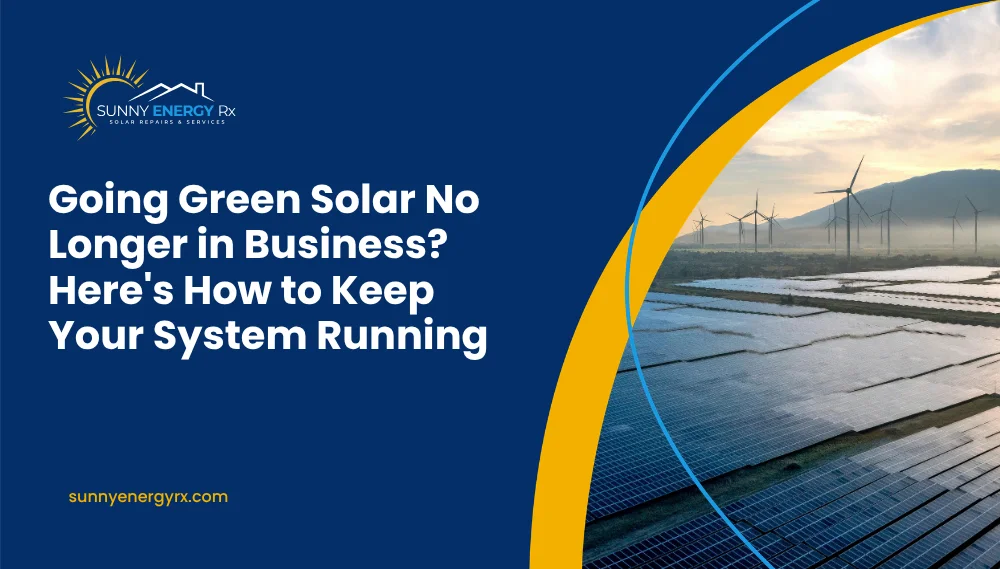
For many Arizona homeowners, Going Green Solar provided an affordable path to rooftop solar. The company primarily operated as an online solar retailer and project provider, supplying systems and coordinating installations through local contractors across the U.S., making solar more accessible to homeowners.
However, many customers have recently reported difficulty obtaining support, including unanswered calls and emails and inactive customer service channels. For Arizona homeowners, limited access to repairs, warranty assistance, monitoring support, or replacement parts can be especially concerning during the state's long, hot summers.
The good news is that most Going Green Solar systems continue generating electricity even if the installer is no longer available. With routine maintenance, many systems can operate efficiently for many years, and independent solar service providers can typically handle inspections, repairs, monitoring, and ongoing maintenance.
This guide explains what happened to Going Green Solar, whether the company was acquired or permanently closed, what warranties may still be available, how financing is affected, what Arizona homeowners should do if their system has become orphaned, and the practical steps you can take to keep your solar system operating safely and efficiently for years to come.
Ready to get your solar system back on track? Whether your panels stopped producing, your monitoring app went quiet, or you just want a second opinion on your system's health, Sunny Energy RX is ready to help, no matter who installed it.
Call 480-470-1023 or request a service visit today.
What Happens If You're a Going Green Solar Customer?
If you purchased your solar system through Going Green Solar and are no longer able to receive support from the company, you may now be considered a solar orphan. This means your original installer or project provider is no longer available to help with ongoing service, even though your solar system is still installed and operating.
As a former customer, you may no longer have access to assistance for:
System repairs and troubleshooting
Routine maintenance and annual inspections
Installer workmanship warranty claims
Monitoring setup, activation, or technical support
Replacement of failed components such as inverters or optimizers
Documentation or service records needed for roof work, insurance claims, or selling your home
While losing your installer can make it more difficult to obtain service or support, it does not mean your solar system has stopped working. In most cases, the equipment installed by Going Green Solar continues to operate normally even after the company is no longer available. What changes is who you contact for maintenance, repairs, troubleshooting, or warranty assistance, not the system's ability to generate electricity.
Now, coming to the more important question for Arizona homeowners: what does the company's closure mean for their existing solar systems, warranties, and long-term support.
Are Going Green Solar Systems Still Working?
Yes. If your solar system was installed through this brand, it can continue producing electricity even if the company is no longer available. An installer's closure does not automatically affect the performance of the solar equipment on your home.
Most Going Green Solar systems are built using components from third-party manufacturers, including:
Solar panels
Inverters
Racking and mounting systems
Monitoring equipment
Because these manufacturers are separate from the installer, the equipment can continue operating as designed. With regular maintenance and prompt repairs when needed, many Arizona solar systems remain productive for 25 years or more, allowing homeowners to continue benefiting from their investment despite their installer no longer being in business.
Although your solar system can continue generating clean energy, the closure of the company raises another important question: who is responsible if something goes wrong? The answer depends largely on the type of warranty covering your system.
What Warranties Are Still Valid?
One of the biggest concerns for Going Green Solar customers is whether their warranties are still in effect. The answer depends on which type of warranty you're referring to. Solar systems typically include both equipment warranties and an installer workmanship warranty, and they are handled differently.
Equipment Warranties
In many cases, equipment warranties remain valid even if Going Green Solar is no longer operating. This is because these warranties are provided by the manufacturers of the individual components, not by the installer.
Depending on your system, manufacturer warranties may still cover components such as:
Solar panels (modules)
Inverters
Microinverters
Power optimizers
Battery storage systems
If a covered component fails during the warranty period, you may be able to work directly with the manufacturer or through an independent solar service provider that can diagnose the issue and assist with the warranty claim. Eligibility will depend on the manufacturer's terms, warranty period, and whether the equipment was properly registered.
Installer Workmanship Warranty
The workmanship warranty is a separate type of coverage and is often the one most affected when an installer closes.
This warranty typically covers installation-related issues such as:
Roof penetrations
Flashing around mounting points
Conduit installation
Electrical wiring quality
Other installation defects
Unlike equipment warranties, workmanship warranties are generally backed by the installing company itself. If the company is no longer operating, there may no longer be an entity responsible for honoring those installation guarantees. As a result, homeowners may need to hire an independent solar service company to inspect and repair any installation-related issues that arise.
What About Your Solar Financing?
If you financed your Going Green Solar system, the company's closure generally does not affect your financing agreement. In most cases, your loan, lease, or power purchase agreement (PPA) is held by a separate financing company rather than the installer.
This means:
Loan payments continue as scheduled.
Lease or PPA agreements remain in effect.
Your utility interconnection and net metering (if applicable) typically remain unchanged.
While the company may no longer be available to service your system, your financing obligations usually remain the same. The primary change is that you'll need to rely on an independent solar service provider for future maintenance, repairs, and troubleshooting instead of the original installer.
The next step now is protecting your investment by organizing your records and ensuring your system is ready for future service. Here are a few practical steps every Arizona homeowner with a Going Green Solar system should take.
Arizona Homeowners: What Should You Do Right Now?
If your Going Green Solar system has become orphaned, taking a few proactive steps now can make future repairs and warranty claims much easier.
1. Gather Your Documents
Keep both physical and digital copies of important records, including:
Installation contract
Permit and inspection paperwork
Utility interconnection approval
Equipment manuals
Financing documents
2. Record Your Equipment Information
Take photos of your system and note the serial numbers for major components, including:
Solar panels
Inverter
Battery (if installed)
Disconnect switch
Electrical panel
This information is invaluable when troubleshooting or ordering replacement parts.
3. Check Your Monitoring System
Verify that your monitoring platform is still reporting system performance. Look for:
Current energy production
Communication or Wi-Fi issues
Error messages
Missing production history
4. Register Your Equipment
If you haven't already, register your solar equipment directly with the manufacturers. This can help streamline future warranty claims if a covered component fails.
5. Schedule a Professional Inspection
Arizona's extreme heat, dust, monsoon storms, and wildlife can all affect solar system performance over time. A periodic inspection can identify small issues before they develop into more expensive repairs.
Taking these proactive steps can help you stay ahead of potential issues. Even with proper maintenance, however, older solar systems may experience normal wear and tear over time. Understanding the most common problems can help you recognize when it's time to seek professional service.
Common Problems Found on Older Going Green Solar Systems
As Going Green Solar systems age, some components may naturally require maintenance or repair. This is especially true if the system has gone several years without professional servicing.
Common issues reported by independent solar service providers include:
Failed inverters
Optimizer or microinverter failures
Loose or damaged wiring
Roof leaks around mounting penetrations
Damaged conduit
Cracked junction boxes
Bird or rodent damage to wiring
Monitoring communication failures
Reduced energy production caused by dirty solar panels
In many cases, orphaned solar systems can also be upgraded to improve performance or add new functionality. Depending on the age of the system and the compatibility of the existing equipment, homeowners may be able to:
Replace an aging inverter with a newer model
Add a home battery storage system
Install an EV charger
Upgrade or restore the system's monitoring hardware
Replace damaged or underperforming panels with compatible modules
Before making any upgrades, it's important to have the system evaluated by an experienced solar service provider. They can verify equipment compatibility, ensure the upgrades comply with electrical codes, and recommend the most cost-effective solution for your existing system.
How Sunny Energy RX Helps Arizona's Solar Orphans
An orphaned system doesn't mean a failed system. Your panels keep producing whether or not the original installer is still in business. But when production quietly drops, an inverter throws a code, or your monitoring app goes dark, the problem is knowing who's still around to diagnose it. That's where Sunny Energy RX comes into picture.
We service your system no matter who installed it. Our NABCEP-certified technicians work on nearly every major panel and inverter brand found on Arizona roofs: SolarEdge, Enphase, SMA, Fronius, Tesla, SunPower, and older string-inverter setups included. Whether your installer went under last year or a decade ago, we can pick up where they left off.
Here's how we support orphaned homeowners:
Full system diagnostics, remote checks and on-site inspection to find hidden faults, wiring issues, and safety risks that a dropped monitoring feed won't show you.
Monitoring restoration, many systems installed since 2008 have remote monitoring that simply stopped reporting when the installer disappeared. We reconnect your portal so you can see production again and catch issues early.
Warranty claim assistance, most solar equipment carries a manufacturer warranty that stays valid even when the installer is gone. We help you navigate the paperwork and work with the manufacturer to pursue coverage you may still be entitled to.
Repairs and replacements, from a single failed panel to inverter faults, we handle the fix and keep your production on track.
Conclusion
Although Going Green Solar is no longer providing residential installation or customer support, that doesn't mean your solar investment has reached the end of its life. Most systems continue generating clean electricity for decades because the panels, inverters, and other components are manufactured by third-party companies that often continue honoring their own equipment warranties. For Arizona homeowners, the key is shifting from relying on the original installer to working with a qualified independent solar service provider. By understanding your remaining warranty coverage, monitoring system performance, scheduling regular inspections, and addressing issues early, you can keep your orphaned solar system operating safely and efficiently for many years to come.
Key Takeaways
Going Green Solar is no longer actively supporting residential customers, and there is no public evidence that another company acquired its customer service or warranty obligations.
Your solar system can continue operating normally even if the original installer is no longer in business.
Manufacturer equipment warranties may still be valid, while installer workmanship warranties may no longer be enforceable.
Solar financing usually remains unchanged, meaning loans, leases, and PPAs continue according to their original terms.
Arizona's extreme heat, dust, monsoons, and wildlife make regular inspections and maintenance especially important for orphaned systems.
Keep all installation documents, equipment serial numbers, and monitoring accounts in a safe place to simplify future service or warranty claims.
Monitor your system's energy production regularly to catch issues such as inverter failures or communication errors before they become costly problems.
Most common issues (such as inverter failures, wiring damage, or monitoring problems) can be repaired without replacing the entire solar system.
Independent solar service providers can inspect, repair, upgrade, and maintain orphaned systems, helping homeowners protect their investment for years to come.
No. Your utility company is not automatically affected if your solar installer goes out of business. As long as your system remains interconnected and meets utility requirements, your net metering or export agreement (if applicable) typically continues without interruption.
In many cases, yes. Depending on your inverter and monitoring hardware, an independent solar service provider may be able to reconnect your existing monitoring system or install a compatible replacement. This allows you to continue tracking energy production and receive performance alerts.
Yes. If your roof is nearing the end of its lifespan, it's often more cost-effective to complete any necessary roof repairs or replacement before making major upgrades to your solar system. This helps avoid the additional cost of removing and reinstalling the panels later.
Potentially. While the original installation incentives have already been claimed, homeowners may still qualify for available federal, state, or utility incentives when adding eligible upgrades such as battery storage or energy management equipment. Eligibility depends on current program requirements.
About the author
Sunny Energy RX Team
The Sunny Energy RX Team is a group of NABCEP-certified Arizona solar technicians with 17+ years of experience. The team specializes in repairing, maintaining and monitoring residential systems from nearly all major brands, including orphaned systems.
Published · Updated